In today's competitive business landscape, the decision between building an in-house development team and outsourcing software development has become increasingly complex. While many organizations focus solely on hourly rates or base salaries when making this critical decision, the reality is far more nuanced. The total hourly cost per team is $1,050.26 for in-house development versus $300 for outsourcing to Europe, revealing a stark difference that extends far beyond simple wage comparisons.
The true financial impact of this decision involves numerous hidden costs that can dramatically alter the total cost of ownership (TCO) over time. Understanding these often-overlooked expenses is crucial for making informed strategic decisions that align with your organization's financial objectives and growth plans.
The Real Cost of In-House Development: Beyond the Salary
Direct Employment Costs and Hidden Expenses
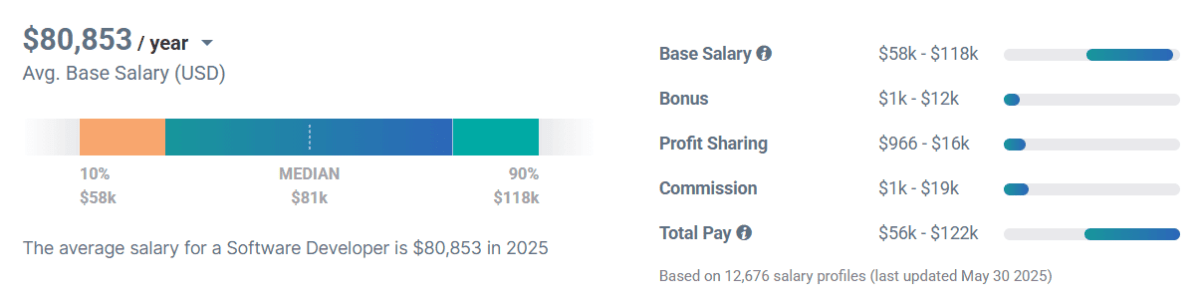
When calculating the cost of in-house development, most organizations start with base salaries. Payscale reports that the average US compensation for an IT developer is $80,853, but this figure represents only the tip of the iceberg. The total costs to hire one software engineer can be as high as $248,000 for the first year, after factoring in recruitment costs, salary, bonuses, taxes, benefits, personal equipment, software licenses, onboarding, and training costs.
What Makes Up the First-Year Cost?
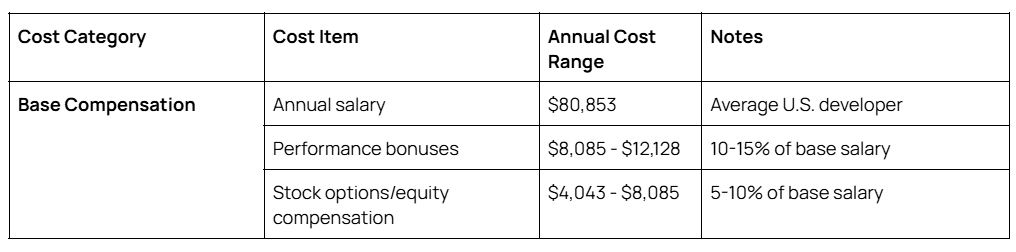
Base Compensation
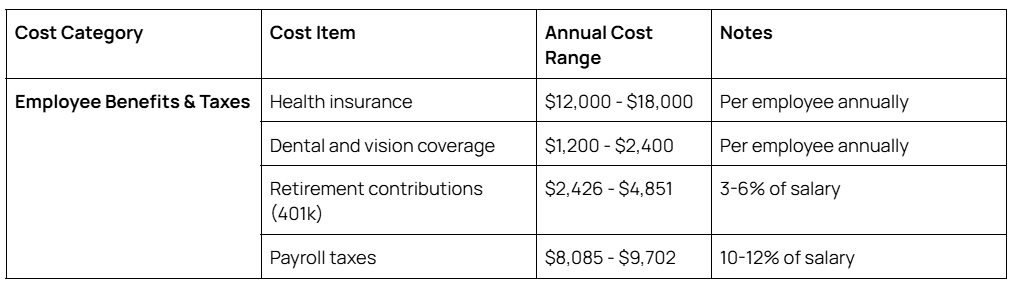
Employee Benefits and Taxes
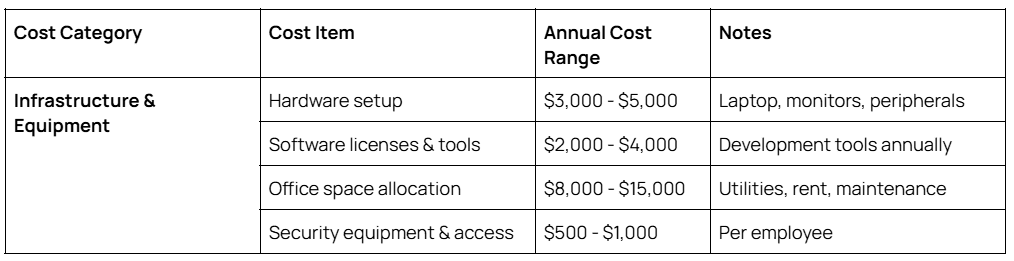
Infrastructure and Equipment Costs
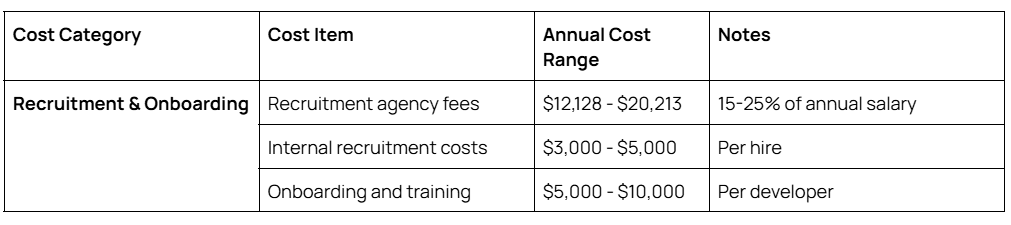
Recruitment and Onboarding Expenses
Ongoing Operational Costs
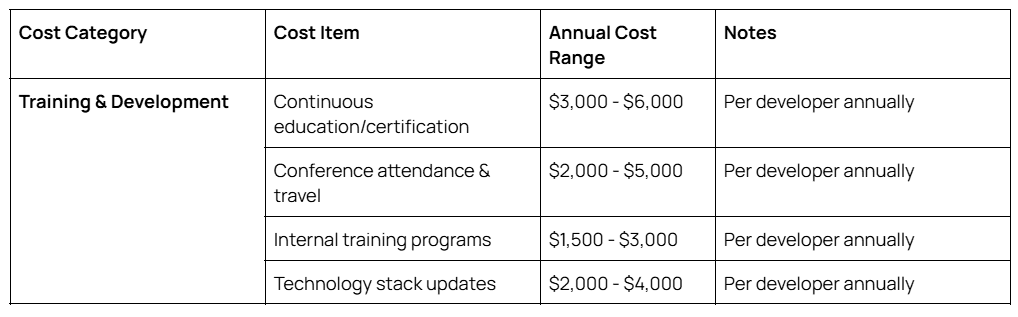
Training and Professional Development
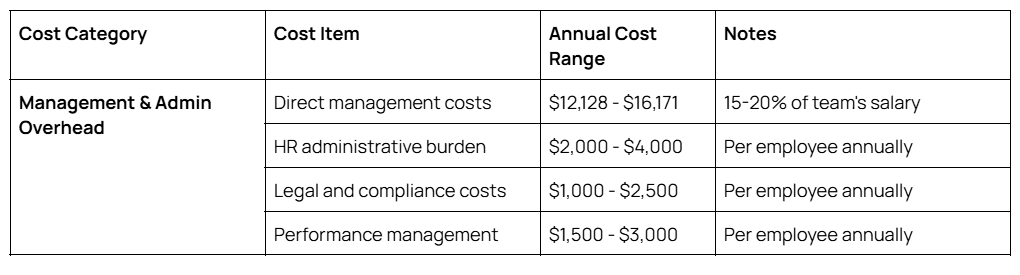
Management and Administrative Overhead
Project Management and Coordination

Hidden Productivity Costs

In-House Development Risks
Talent Acquisition and Retention Challenges
- Competitive hiring market driving up compensation costs
- Skills gaps requiring extensive training investments
- High turnover rates in technology roles
- Difficulty scaling teams quickly for project demands
Infrastructure and Technology Costs
- Continuous hardware and software upgrades
- Security infrastructure and compliance requirements
- Disaster recovery and backup system investments
- Technology obsolescence and migration costs
Project Management Complexity
- Internal coordination and communication overhead
- Cross-functional team integration challenges
- Resource allocation and priority management
- Knowledge documentation and transfer requirements
The Maintenance Reality
One of the most overlooked aspects is long-term maintenance costs. Studies suggest that maintenance can constitute up to 90% of the total cost of ownership. This includes various types of maintenance efforts, such as corrective, adaptive, preventive, and perfective maintenance.
In-House Maintenance Costs
- Dedicated maintenance team salaries: $200,000-$400,000 annually
- Ongoing training for technology updates: $15,000-$30,000 annually
- Infrastructure and tool maintenance: $50,000-$100,000 annually
- Emergency support and on-call availability: $25,000-$50,000 annually
Hidden Project Costs and Budget Overruns
Hidden costs can account for up to 20% of the project budget. These software development expenses emerge throughout the development process and can impact the price of the final product.
Common Hidden Cost Categories
- Technical Debt: Shortcuts taken during development require future refactoring
- Scope Creep: Unplanned feature additions and requirement changes
- Integration Complexity: Unexpected challenges with third-party systems
- Performance Optimization: Additional work to meet scalability requirements
- Security Enhancements: Unanticipated security requirements and compliance needs
The Bottom Line
When you factor in all these hidden costs, the true expense of in-house development can be 40-60% higher than initial budget estimates. What starts as an $80,853 salary quickly becomes a $248,000 first-year investment per developer.
This doesn't even account for the opportunity costs of delayed time-to-market, the risks of talent shortage, or the complexity of scaling teams rapidly to meet business demands.
Ready to discover how outsourcing can deliver up to 60% cost savings while accelerating your time-to-market?
In Part 2 of this series, we'll dive deep into the economics of outsourcing, provide a comprehensive financial analysis comparing both approaches, and share a strategic framework to help you make the right decision for your organization.
Want to get a personalized cost analysis for your development project? INNOMIZE provides transparent, cost-effective development solutions that deliver measurable ROI. Contact us for a comprehensive assessment tailored to your specific requirements.