Remember 2022? ChatGPT dropped in November and suddenly everyone was using it for everything, writing emails, researching topics, drafting resumes, even asking for recipes.
It was revolutionary. But it was also like using a Swiss Army knife for every job.
Fast forward to 2026. The AI landscape looks completely different. Today, the smartest professionals aren't using one tool for everything, they're using the right tool for each task.
Here's how the game has changed.
Writing
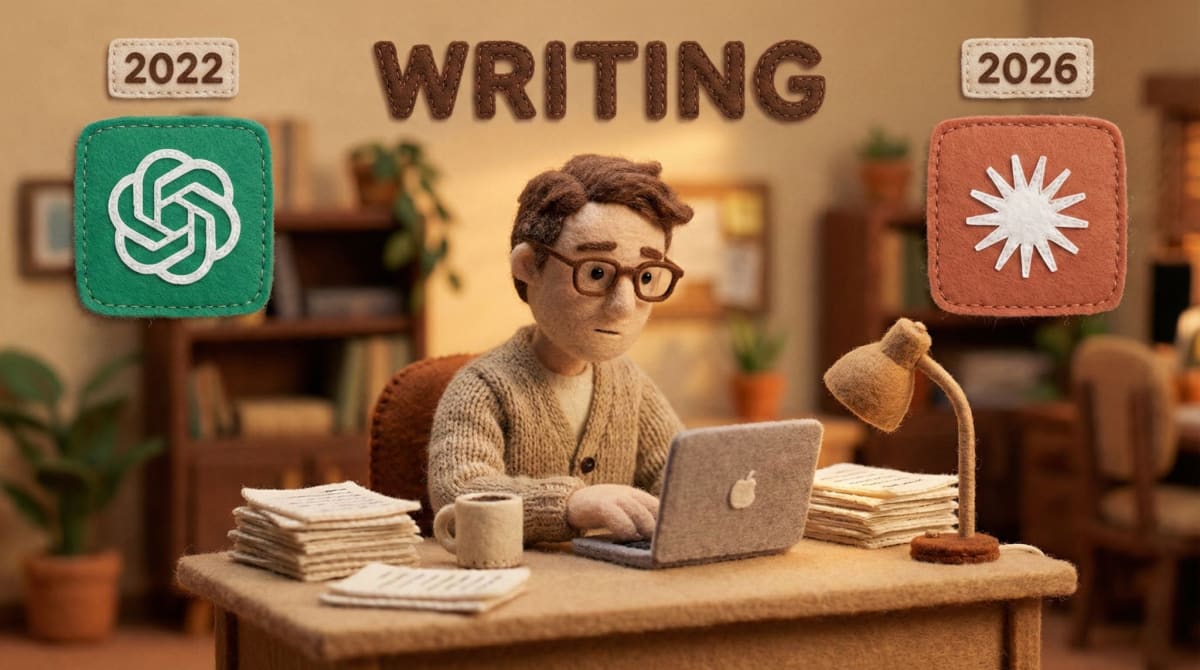
In 2022, we copied and pasted ChatGPT outputs and spent hours editing them to sound human. The tone was off. The content was generic. And anything longer than 2,000 words? Forget it.
Claude changed the game. With a 200K token context window, it handles long-form content without losing track of your brief. The writing feels more natural, the reasoning is sharper, and it actually follows complex instructions. For blog posts, reports, and documentation, Claude is the new standard.
Research
Here's a painful memory: asking ChatGPT a research question and getting a confident, well-written answer that was completely wrong. No sources. No way to verify. Just vibes.
Perplexity fixed this. It searches the web in real-time, cites every source, and lets you dig deeper with follow-up questions. You get answers you can actually trust, and verify in seconds. For anyone doing market research, competitive analysis, or fact-checking, Perplexity is non-negotiable.
Resume Building
Back in 2022, we'd ask ChatGPT to "improve my resume" and get a generic rewrite that still got filtered out by applicant tracking systems (ATS).
Teal is built specifically for job seekers. It analyzes job descriptions, optimizes your resume for ATS keywords, tracks your applications, and even scores how well you match each role. It's not just writing, it's a full job search system. If you're actively job hunting, Teal gives you an unfair advantage.
Email & Sales Pitch
Writing sales emails with ChatGPT meant copying outputs, personalizing manually, and hoping for the best. It worked, but it didn't scale.
Jason AI is built for outbound sales. It researches your prospects, crafts personalized emails based on their company and role, and integrates directly with your CRM. The result? Higher open rates, more replies, and less time writing. For sales teams and business development, this is the upgrade you didn't know you needed.
What's Next?
That's 4 down, 4 to go.
In Part 2, we'll cover how AI has transformed studying, note-taking, data analysis, and document reading. The pattern is clear: specialized tools deliver specialized results.