Cloud computing has transformed the healthcare industry by offering scalable, cost-effective, and secure solutions for managing patient data, improving collaboration, and enhancing healthcare delivery. With the integration of artificial intelligence (AI), machine learning (ML), telemedicine, and real-time data analytics, healthcare organizations can streamline their operations while ensuring regulatory compliance and patient data security.
The global healthcare cloud computing market was valued at $46.1 billion in 2023 and is expected to grow at a CAGR of 17.5%, reaching $120.6 billion by 2029. This rapid growth highlights the increasing reliance on cloud solutions to improve healthcare efficiency, reduce operational costs, and enhance patient care.
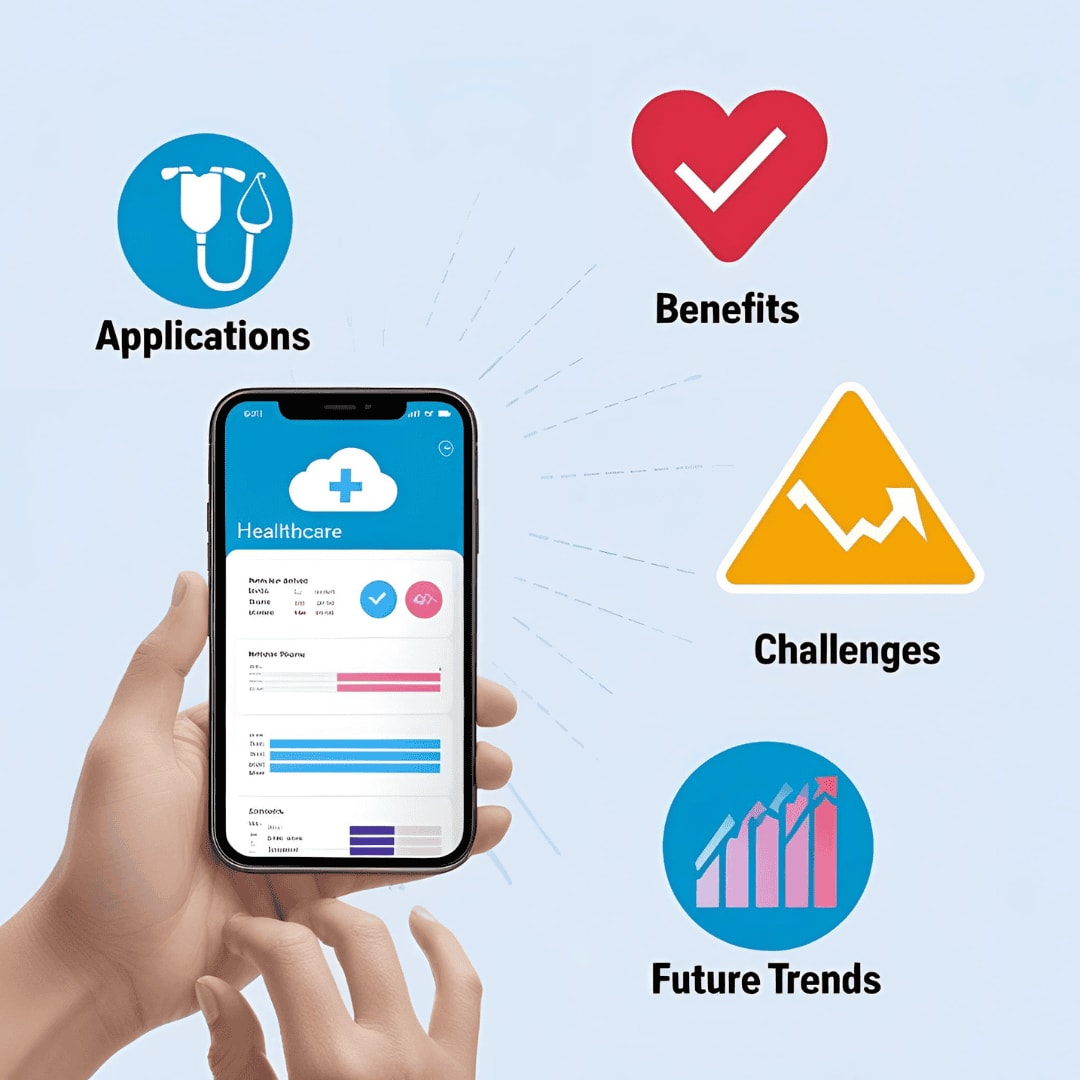
This article explores the applications, benefits, challenges, future trends, adoption strategies, and types of cloud computing in the healthcare sector.
1. Applications of Cloud Computing in Healthcare
Cloud computing enables efficient data management, remote patient care, and enhanced diagnostic capabilities. Key applications include:
1.1 Telemedicine and Remote Patient Care
Telemedicine has redefined healthcare by enabling virtual consultations, remote monitoring, and digital healthcare services. Cloud computing powers telemedicine by ensuring secure data exchange, seamless video conferencing, and scalable EHR storage.
Healthcare providers rely on HIPAA- and GDPR-compliant cloud platforms to protect patient data and maintain privacy. AI and machine learning (ML) integration enhances telehealth services by analyzing patient symptoms, detecting anomalies, and assisting in preliminary diagnoses.
Cloud-powered real-time analytics and Internet of Medical Things (IoMT) devices allow physicians to monitor patient vitals remotely, reducing unnecessary hospital visits. During the COVID-19 pandemic, Teladoc Health saw a 156% increase in virtual visits, highlighting the scalability of cloud-based telemedicine. Similarly, Amwell uses AI-driven chatbots for appointment scheduling and preliminary assessments, improving healthcare accessibility for more than 55 health plans representing more than 90 million people.
Cloud-based telemedicine enhances patient engagement, reduces operational costs, and expands access to quality care, particularly in rural and underserved communities.
1.2 Electronic Health Records (EHR) Management
Cloud computing enhances EHR management by ensuring real-time, secure, and interoperable access to patient records. Cloud-based EHR systems centralize medical data, allowing healthcare providers to retrieve and update patient information instantly.
Interoperability enables seamless data exchange between hospitals, pharmacies, and specialists, reducing redundant tests and improving treatment accuracy. Additionally, integrated data analytics help detect health trends and support data-driven treatment decisions.
For example, Kaiser Permanente uses cloud-based EHRs to enhance patient care coordination across its network, while Medsphere Systems helps hospitals cut IT costs through cloud-based record management. With built-in HIPAA and GDPR compliance, cloud-based EHRs ensure data security and regulatory adherence.
1.3 Medical Imaging and AI-Powered Diagnostics
Cloud computing enhances medical imaging storage, retrieval, and analysis, improving diagnostic precision. Cloud-based PACS (Picture Archiving and Communication Systems) securely store and manage large imaging datasets, including X-rays, MRIs, and CT scans, ensuring fast and remote access for healthcare providers.
AI-powered imaging solutions assist radiologists by detecting diseases like cancer with greater accuracy. Machine learning algorithms analyze medical scans, identifying anomalies that might be missed in traditional diagnostics.
For example, Google Health and NetApp offer AI-driven diagnostic tools that help radiologists detect tumors with up to 90% accuracy. These cloud-based solutions reduce diagnostic errors, speed up medical assessments, and enhance early disease detection.
1.4 Remote Patient Monitoring (RPM) and Wearable Health Devices
Cloud-based healthcare solutions support continuous monitoring of chronic disease patients using wearable devices and connected sensors. These Internet of Medical Things (IoMT) devices transmit real-time health data—such as heart rate, oxygen levels, and glucose levels—to cloud platforms, enabling remote patient tracking by healthcare providers.
AI-driven analytics process this data to detect early signs of critical conditions, allowing timely interventions and reducing emergency hospitalizations.
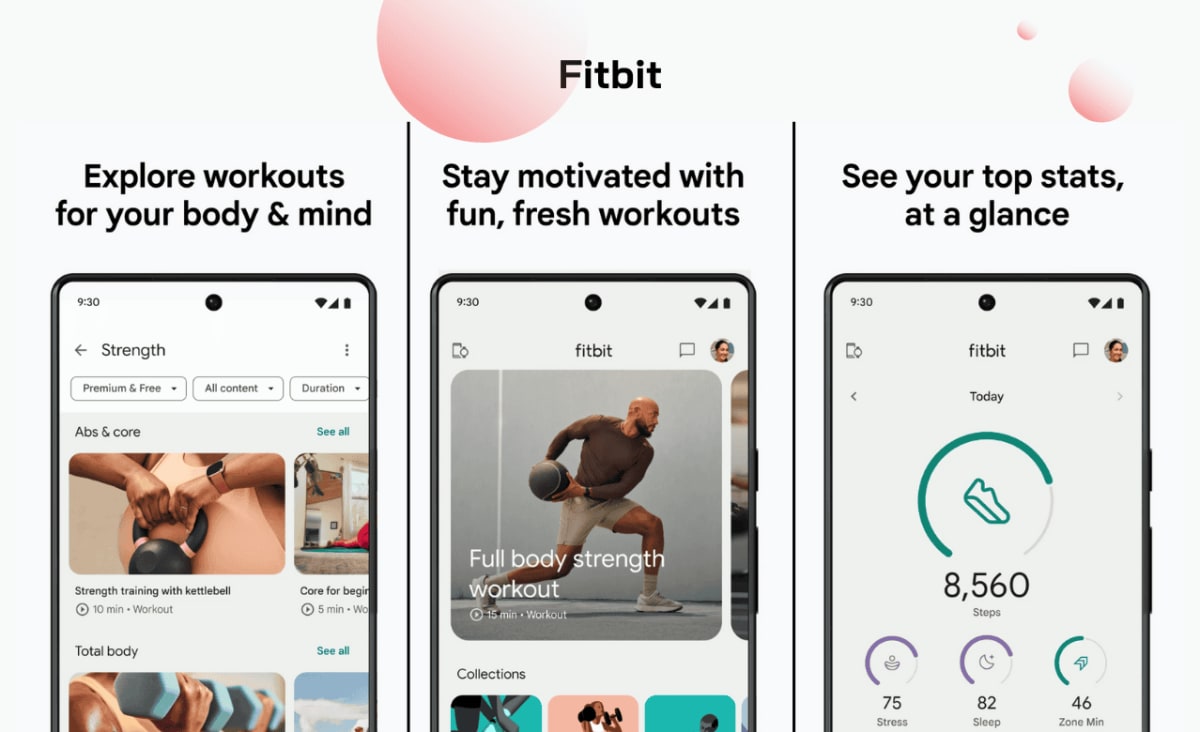
For example, Apple Watch and Fitbit use cloud-based IoT technology to monitor heart rate, oxygen levels, and sleep patterns. Studies show that these devices can detect atrial fibrillation (AFib) with up to 94% accuracy, helping users and doctors identify cardiovascular risks early.
1.5 Revenue Cycle Management (RCM)
Cloud-based financial solutions optimize billing, claims processing, and financial reporting, enhancing the efficiency of healthcare institutions. Automated billing systems minimize human errors and accelerate insurance claims, improving cash flow and reducing administrative burdens.
AI-driven fraud detection helps identify irregularities in transactions, mitigating risks associated with fraudulent claims. With healthcare fraud costing the U.S. industry $68 billion annually, cloud-based RCM solutions leverage machine learning to reduce fraudulent activities.
Cloud-based RCM platforms also improve revenue cycle efficiency. Hospitals adopting these solutions experience a 30% reduction in administrative costs and a 15% increase in revenue diversifying services. Additionally, automated verification reduces claim denials, ensuring faster reimbursements.
Avaneer Health, a cloud-based RCM provider, streamlines healthcare transactions, cutting processing time and enhancing financial transparency across healthcare networks.
2. Benefits of Cloud Computing in Healthcare
2.1 Cost Savings and Scalability
Cloud computing significantly reduces healthcare IT costs by eliminating the need for expensive on-premises data centers. Hospitals migrating to cloud-based electronic health record (EHR) systems experience a reduction in IT expenses. With cloud adoption, healthcare providers no longer require large capital investments in hardware, maintenance, and data storage.
Scalability is another major advantage, allowing healthcare facilities to adjust computing resources based on patient demand. Pay-as-you-go pricing models ensure cost efficiency, enabling providers to scale services during peak periods, such as flu seasons or pandemics, without overprovisioning resources.
A hospital transitioning from on-premise EHR to a cloud-based solution can save millions in IT expenses while ensuring real-time data access across departments. Studies indicate that cloud adoption can lead to faster deployment of new healthcare applications and reduction in downtime, further enhancing operational efficiency.
2.2 Enhanced Collaboration and Interoperability
Cloud computing facilitates seamless collaboration between healthcare professionals by enabling real-time data sharing and improving patient care coordination. With interoperable cloud-based systems, hospitals, pharmacies, and insurance providers can securely exchange patient data, reducing administrative bottlenecks and enhancing treatment efficiency.
Interoperability ensures that different healthcare systems integrate smoothly, allowing physicians to access comprehensive patient records across multiple facilities. Studies show that inefficient data exchange contributes to medical errors, highlighting the need for unified cloud-based platforms.
Real-time data management improves diagnostic accuracy and reduces treatment delays. Cloud-based electronic health records (EHRs) enable specialists and general practitioners to collaborate remotely on complex cases, leading to faster decision-making and improved patient outcomes.
2.3 Improved Patient Outcomes with AI and Analytics
Cloud computing integrates AI-powered analytics to enhance patient care by providing real-time insights and predictive diagnostics. AI-driven diagnostic tools have significantly improved disease detection rates, with studies showing accuracy in identifying tumors and other critical conditions.
Predictive analytics helps healthcare providers anticipate complications, reducing hospital readmissions. By analyzing vast amounts of patient data, AI recommends personalized treatment plans for individuals with chronic diseases, improving overall health outcomes. Cloud-based analytics also assist in early disease detection, reducing diagnostic errors and enhancing preventive care strategies.
2.4 Disaster Recovery and Security
Cloud computing enhances data security and disaster recovery by providing encrypted storage, automated backups, and compliance with healthcare regulations such as HIPAA and GDPR. These measures protect patient records from cyber threats, data breaches, and system failures.
Healthcare providers using cloud-based disaster recovery solutions benefit from faster data restoration and minimal downtime in case of cyberattacks or natural disasters. Ransomware attacks on hospitals increased by 94% in recent years (CyberPeace Institute), making cloud-based security essential for protecting critical medical data.
Leading platforms like Google Cloud and Microsoft Azure offer HIPAA-compliant disaster recovery to ensure uninterrupted healthcare services and safeguard patient information.
3. Challenges and Risks of Cloud Computing in Healthcare
3.1 Data Security and Privacy Risks
While cloud computing enhances data accessibility, it also introduces significant security challenges. Healthcare data breaches cost an average of USD10.93 million per incident in 2023 (IBM Cost of a Data Breach Report), making the sector a prime target for cybercriminals.
Unauthorized access, ransomware attacks, and insider threats pose risks to sensitive patient information. Without proper encryption, multi-factor authentication, and strict access controls, healthcare organizations remain vulnerable to cyber threats.
Ensuring HIPAA and GDPR compliance, conducting regular security audits, and adopting zero-trust security models are critical in mitigating these risks.
3.2 Compliance with Regulations
Healthcare organizations must comply with HIPAA (US), GDPR (EU), and ISO 27001 to ensure data security and privacy.
-
HIPAA mandates safeguards for protected health information (PHI), with penalties reaching $1.5 million per violation per year.
-
GDPR enforces strict data processing rules, with fines up to €20 million or 4% of global revenue for non-compliance.
-
ISO 27001 provides a global framework for securing health data against cyber threats and unauthorized access.
3.3 Downtime and Service Disruptions
Cloud service outages can disrupt hospital workflows, delay critical patient care, and compromise access to electronic health records (EHRs).
-
99.99% uptime is promised by major cloud providers, but unexpected outages still occur.
-
A 2023 AWS outage affected healthcare applications, delaying patient access to telemedicine services.
-
Hospitals relying solely on cloud-based systems face increased risks if backup solutions are not in place.
To mitigate disruptions, healthcare organizations implement hybrid cloud solutions, failover mechanisms, and redundancy protocols to ensure continuous access to critical systems.
4. Future Trends in Healthcare Cloud Computing
4.1 AI and Machine Learning Integration
AI-powered analytics will play a key role in early disease detection, treatment personalization, and operational efficiency.
-
AI algorithms improve diagnostic accuracy by analyzing large datasets of medical images, lab reports, and patient histories.
-
Machine learning models help in drug discovery, reducing development time and costs.
-
IBM Watson and Google Health have successfully implemented AI to detect cancer and recommend personalized treatments based on patient-specific data.
4.2 Expansion of IoT and IoMT (Internet of Medical Things)
The Internet of Medical Things (IoMT) is rapidly growing, integrating wearable devices, remote monitoring tools, and smart medical equipment.
-
The IoMT market is projected to reach US$244.4 Billion by 2029.
-
Smart devices track real-time vitals, reducing hospital readmissions and enabling proactive healthcare.
Cloud-based IoMT platforms securely store, analyze, and transmit patient data, allowing healthcare providers to detect health anomalies early.
4.3 Personalized Medicine and Genomics
Cloud computing is revolutionizing genomics and precision medicine, allowing researchers to analyze vast genomic datasets efficiently.
Leading institutions use cloud-based genomic databases to develop customized treatment plans for cancer, rare diseases, and chronic conditions, improving patient outcomes.
5. Strategies for Cloud Adoption in Healthcare
5.1 Choosing the Right Cloud Model
Selecting the appropriate cloud model is crucial for balancing security, cost, and scalability:
-
Private Cloud – Ideal for hospitals handling highly sensitive patient data, offering enhanced security and compliance.
-
Public Cloud – Cost-effective for general healthcare applications, such as telemedicine and non-critical patient records.
-
Hybrid Cloud – A combination of both, providing security for critical data while leveraging scalability for other services.
5.2 Implementing Security and Compliance Measures
Robust security strategies are essential to protect patient data and ensure regulatory compliance:
-
End-to-end encryption safeguards medical records from unauthorized access.
-
Multi-factor authentication (MFA) strengthens access control for healthcare professionals.
-
Zero-trust security models require continuous verification, reducing cybersecurity risks.
5.3 Staff Training for Cloud Adoption
Successful cloud adoption depends on healthcare IT teams being well-trained in:
-
Cloud security best practices to prevent breaches and maintain compliance.
-
Regulatory standards such as HIPAA, GDPR, and ISO 27001.
-
AI-driven analytics for leveraging predictive insights and improving patient care.
Proper training ensures seamless integration, enhances data security, and maximizes the benefits of cloud computing in healthcare.
Final Thoughts
Cloud computing is revolutionizing the healthcare industry, offering cost savings, improved efficiency, enhanced collaboration, and better patient outcomes. While challenges such as security risks and regulatory compliance remain, advancements in AI, IoT, and predictive analytics will continue to shape the future of cloud-powered healthcare.
Transform Healthcare with INNOMIZE
Unlock the power of cloud computing with INNOMIZE—your trusted partner in secure, scalable, and compliant healthcare solutions. Whether you're optimizing EHRs, leveraging AI-driven analytics, or streamlining operations with DevOps, we help you enhance efficiency, reduce costs, and improve patient care. Let’s innovate together!