The web development landscape is constantly evolving, driven by advancements in technology, shifts in industry demands, and emerging best practices. As businesses and developers strive to build faster, more secure, and scalable applications, programming languages continue to adapt and evolve.
Some languages have maintained their dominance due to their versatility and widespread adoption, while others have gained traction because of their specialized capabilities. Whether you are a beginner looking to start your journey in web development or an experienced developer staying ahead of the curve, understanding the most popular programming languages can help you make informed decisions about your tech stack.
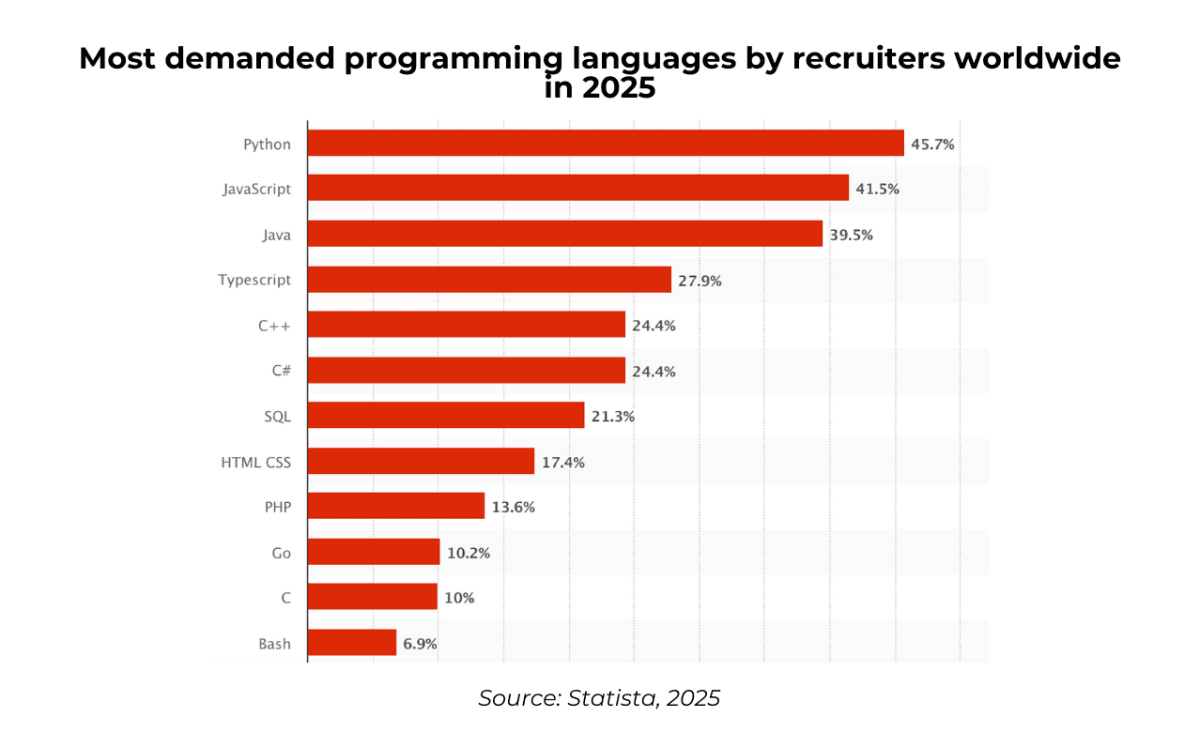
This article explores the 10 most popular web programming languages in 2025, based on their usage, community support, performance, and relevance in modern web applications. From front-end technologies that shape user experiences to back-end languages that power data processing and automation, these languages define the digital world we interact with every day.
Why it stays on top: Python is widely used in web development, data science, and AI-driven applications. Its simplicity and extensive libraries make it a go-to choice for rapid web development, especially with Django and Flask.
Key Trends in 2025:
- Increased use in AI-powered web applications for chatbots, recommendation systems, and automation.
- Flask and Django evolved to support serverless architectures for better scalability and cost efficiency.
- Python’s role in API-first development, making it easier to build microservices and integrate third-party services.
- Enhanced security features and better performance optimization for web applications.
Why it's still relevant: JavaScript remains the backbone of web development, used by nearly all modern websites. With frameworks like React, Vue.js, and Svelte pushing the boundaries of interactive UI development, JavaScript continues to dominate both front-end and full-stack projects. It is also heavily used in mobile and desktop application development through frameworks like React Native and Electron.
Key Trends in 2025:
- Server-side growth with Node.js for scalable backend solutions.
- Enhanced performance with WebAssembly (WASM) for running high-performance applications in the browser.
- AI-assisted development tools to streamline coding and debugging processes.
- Expanded use in Progressive Web Apps (PWAs) and single-page applications.
Why it's still here: Java remains a major player in enterprise web development, backend systems, and Android applications. Frameworks like Spring Boot keep Java relevant in modern web architectures, ensuring security and scalability.
Key Trends in 2025:
- Continued dominance in enterprise web applications with high security and stability.
- Growth of serverless Java applications for improved cloud integration.
- Increased adoption in microservices and API development.
- New language features in Java 21+ improving performance and developer productivity.
- TypeScript
Why it's rising: TypeScript, a superset of JavaScript, provides static typing, improving code maintainability and scalability. With growing adoption in large-scale applications, its popularity has surged, especially in enterprise environments.
Key Trends in 2025:
- Strong integration with React, Angular, and Next.js for modern web applications.
- Improved developer experience with better IDE support and advanced type inference.
- Growing adoption in backend development with frameworks like NestJS and Deno.
- Increased use in strict type-checking for reducing runtime errors and improving application stability.
Why it's relevant: While not typically associated with web development, C++ plays a critical role in performance-intensive applications, game development, and web browsers. It is commonly used for backend services requiring extreme performance and real-time processing.
Key Trends in 2025:
- Increased use in high-performance web applications such as financial trading platforms.
- More optimizations in WebAssembly-powered solutions for running C++ code in browsers.
- Role in backend services for gaming, AI, and scientific computing.
- Improved security measures for memory management and application stability.
Why it's on the list: C# is a powerful language widely used for web applications, particularly with ASP.NET Core, which has gained significant traction in enterprise and cloud-based development.
Key Trends in 2025:
- ASP.NET Core becoming more efficient and scalable with built-in cloud integration.
- Better integration with cloud-native solutions, making it ideal for distributed systems.
- Growing interest in Blazor for building interactive web apps with WebAssembly.
- Improved performance optimizations for game development and high-performance computing.
Why it’s indispensable: SQL remains the standard language for managing databases, which are essential for dynamic web applications. The need for efficient data storage, retrieval, and analysis continues to make SQL a critical tool for developers.
Key Trends in 2025:
- Increased adoption of cloud-based SQL databases like Amazon RDS, Google Cloud SQL, and Azure SQL.
- More integration with NoSQL solutions for hybrid architectures, combining relational and non-relational data storage.
- Performance improvements in modern database engines such as PostgreSQL and MySQL, with better indexing and query optimization.
- Enhanced security measures for data protection and compliance with global regulations.
Why it's essential: HTML and CSS are the fundamental technologies for structuring and styling web pages. While they are not traditional programming languages, they play a critical role in front-end development. The continuous improvements in CSS have made it a powerful tool for creating complex layouts and animations.
Key Trends in 2025:
- Increased adoption of CSS frameworks like Tailwind CSS and Bootstrap for rapid development.
- More browser support for advanced CSS features such as subgrid, container queries, and CSS Houdini.
- Expanding capabilities of HTML5 APIs, including WebXR for augmented reality applications.
Why it's essential: PHP remains a dominant language for server-side web development, powering a significant portion of the internet, including WordPress, e-commerce platforms, and CMS-driven websites. Despite the rise of newer technologies, PHP continues to evolve, with frameworks like Laravel improving its security, performance, and maintainability.
Key Trends in 2025:
- Continued dominance in content management systems (CMS), especially with WordPress and other PHP-based platforms.
- Performance improvements and better security features in PHP 8+, making it more competitive.
- Increased adoption of Laravel, Symfony, and other modern PHP frameworks for enterprise-grade applications.
- Integration with serverless computing and cloud-based hosting solutions, making PHP more scalable.
10. Go (Golang)
Why it's essential: Go (Golang) is a high-performance, cloud-native language designed for efficiency and scalability. Its concurrency model, lightweight execution, and strong standard library make it a preferred choice for microservices, cloud computing, and backend systems. Major tech companies use Go to power distributed systems and high-traffic APIs.
Key Trends in 2025:
- Growing adoption in cloud-native applications, especially for Kubernetes-based microservices.
- Increasing use in DevOps and backend development, replacing traditional languages for infrastructure automation.
- More AI-driven performance optimizations, making Go an even better choice for high-performance applications.
- Expansion in API-driven architectures, with Go playing a key role in building fast, scalable web services.

Choosing the Best Web Programming Language for Your Needs
1. Experience Level
If you're just starting, Python and JavaScript are great choices due to their simplicity, readability, and widespread use in web development. More experienced developers may prefer Java, C++, or Go, which offer higher performance, concurrency handling, and system-level control but require a deeper understanding of programming concepts.
2. Project Goals
Your programming language should match your project requirements. If you're building a data-driven web application, Python (Django, Flask) is an excellent choice. For high-performance backend services, Go is ideal. Java and TypeScript are widely used in enterprise applications due to their scalability and reliability. If you're working with content management systems or e-commerce platforms, PHP remains relevant.
3. Community and Support
A strong developer community ensures continuous improvements, extensive documentation, and troubleshooting support. Python, JavaScript, and Java have some of the largest global communities, making them easier to work with for long-term projects. TypeScript, PHP, and Go are also gaining traction with more frameworks, libraries, and enterprise adoption.
Selecting the right programming language based on your experience, project goals, and available resources ensures better performance, maintainability, and long-term success in web development.
Conclusion
The web development landscape in 2025 continues to evolve, with Python emerging as a dominant force alongside JavaScript, Java, and TypeScript, which remain key players in modern applications. C++ and C# power high-performance and enterprise systems, while SQL remains essential for managing and analyzing data. HTML/CSS continues to be the foundation of front-end development, and PHP and Go maintain relevance in web applications and backend services. As technology advances, businesses and developers must stay adaptable, leveraging the right tools for scalability, security, and efficiency.
At INNOMIZE, we specialize in these leading programming languages, helping businesses build scalable, secure, and high-performance web applications. Our expertise spans Python, JavaScript, TypeScript, Java, C#, SQL, PHP, and Go, allowing us to develop custom solutions, cloud-based applications, and AI-powered platforms tailored to your needs. Whether you're modernizing your system, optimizing performance, or integrating advanced technologies, partner with INNOMIZE to bring your vision to life with the right tech stack.
Which programming language do you see shaping the future of web development? Let us know your thoughts!