Vietnam has rapidly become a leading destination for companies looking to build high-quality tech teams. With a growing pool of skilled IT professionals, cost-effective development options, and strong government support for the technology sector, Vietnam offers significant opportunities for businesses aiming to scale their development capabilities.
The country’s digital transformation is accelerating, with Vietnam's IT industry contributing 14.26% to the national GDP in 2022, and projections indicating a 30% contribution by 2030. The Vietnamese government has launched multiple initiatives, including tax incentives and startup incubators, to attract foreign tech investments. In 2024, IT revenue alone was VND248 trillion reported by MIC. The value Vietnam created in total revenue of foreign invested enterprises (FIEs) was VND486 trillion ($19 billion).
To build a robust tech team in Vietnam, companies need to understand the market landscape, leverage the right hiring models, and ensure strategic alignment with their business goals. This article provides key insights, data-driven analysis, and practical strategies for establishing a high-performing tech team in Vietnam.
Introduction to Building a Tech Team in Vietnam: Key Strategies for Success
Vietnam’s IT services sector has experienced rapid growth, positioning the country as a prime destination for businesses looking to build and scale their tech teams. With a strong talent pool, cost advantages, and increasing global investments, Vietnam is emerging as a competitive tech hub in Southeast Asia.
Market Growth and Economic Outlook
Vietnam’s IT outsourcing industry is on an upward trajectory, driven by government-backed digital transformation policies and a thriving startup ecosystem.
- The IT outsourcing revenue is projected to reach US$792.63m in 2025, growing at a 11.76% CAGR from 2025 to 2029.
- An annual report from Google and Temasek showed that Vietnam had the fastest-growing digital economy in Southeast Asia in 2022, posting year-on-year growth of 28%.
- Major global tech giants, including LG, Samsung, Amkor, and NVIDIA have made significant investments in Vietnam, recognizing its potential as a regional technology hub.
- The government actively supports IT development through tax incentives, training programs, and infrastructure investments in technology parks and innovation centers.
Talent Pool and Availability
Vietnam’s workforce is a major driver of its IT sector growth, with a continuous influx of skilled engineers and developers.
- The country has over 530,000 IT professionals, with 50,000-57,000 new IT graduates entering the workforce annually.
- Nearly 74% of developers are under 35 years old, making Vietnam’s workforce adaptable, dynamic, and scalable for long-term growth. The highest ratio is 25-29 years old (29.3%)
- Vietnamese developers are proficient in popular programming languages, including:
Java – Dominant in enterprise applications and fintech.
Python – Widely used in AI, machine learning, and data science.
C++ – Strong in embedded systems, gaming, and cybersecurity.
JavaScript – Essential for web and mobile application development.
- The country is also rapidly expanding expertise in AI, blockchain, and cloud computing, making it an attractive outsourcing destination for emerging technologies.
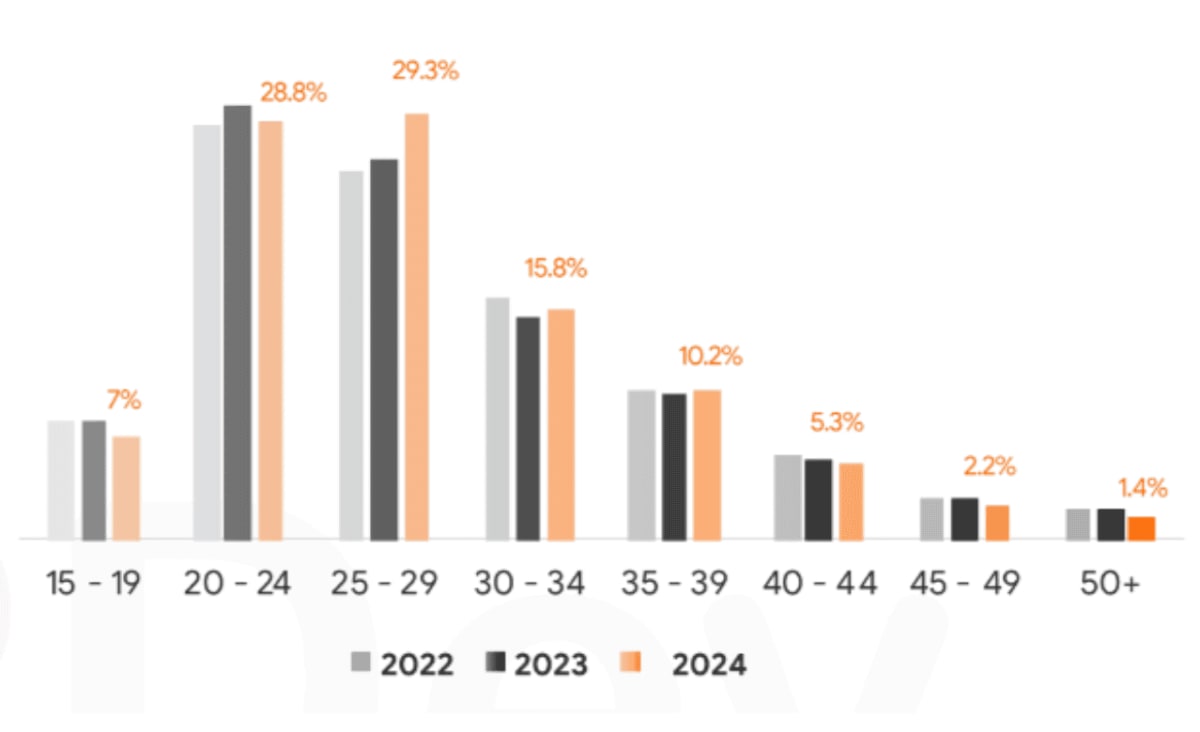
Vietnam tech talents report 2024, TopDev
Competitive Cost Structure
Vietnam offers a significant cost advantage while maintaining a high standard of software development quality.
- Software development costs in Vietnam are 30-50% lower compared to the US, Western Europe, and even regional tech hubs like Singapore.
- The average annual salary for software developers in Vietnam ranges from $33,900, depending on experience and expertise:
Junior Developers: $20,340 – $27,120 per year
Mid-Level Developers: $27,120 – $40,680 per year
Senior Developers: $40,680 – $61,020 per year
- The combination of affordability and technical expertise allows businesses to scale teams efficiently without compromising quality.
Emerging Tech Hubs in Vietnam
Vietnam’s IT ecosystem is concentrated in three major cities, each with its own strengths:
Ho Chi Minh City – The largest tech hub, home to startups, multinational IT firms, and outsourcing companies. It has a vibrant startup ecosystem and strong fintech, e-commerce, and SaaS development sectors.
Hanoi – A center for AI, big data, and R&D-driven companies. The city hosts top universities and research institutions, producing highly skilled engineers in advanced tech fields.
Da Nang – A rapidly growing, cost-effective alternative with strong government support for IT development. It attracts companies looking for affordable outsourcing while maintaining high-quality software development.
Nearly 95% of developers are locating in 2 biggest cities of Vietnam: Ho Chi Minh 59%, Ha Noi 35%
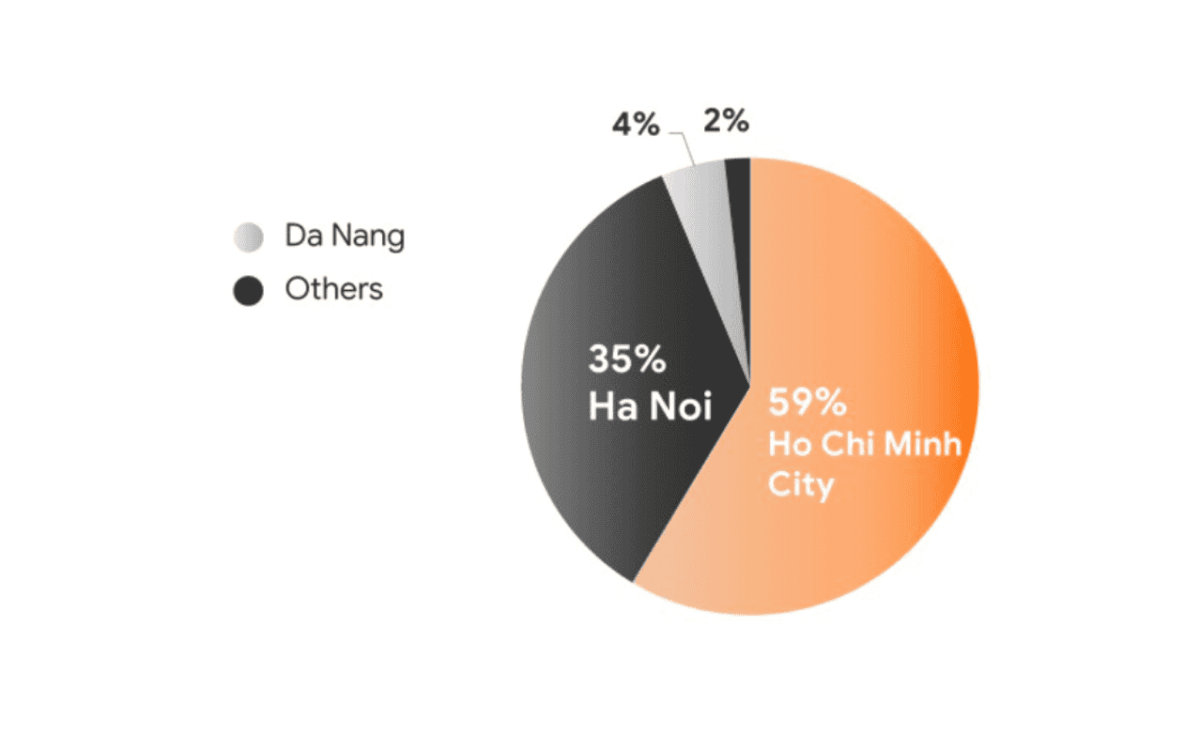
Vietnam tech talents report 2024, TopDev
Exploring the Advantages, Challenges, and Key Strategies for Building a Successful Tech Team in Vietnam
Vietnam offers a unique combination of advantages for businesses looking to establish or expand their tech teams.
Access to a Highly Skilled Workforce
- Vietnam ranks among the top 10 countries in software development outsourcing.
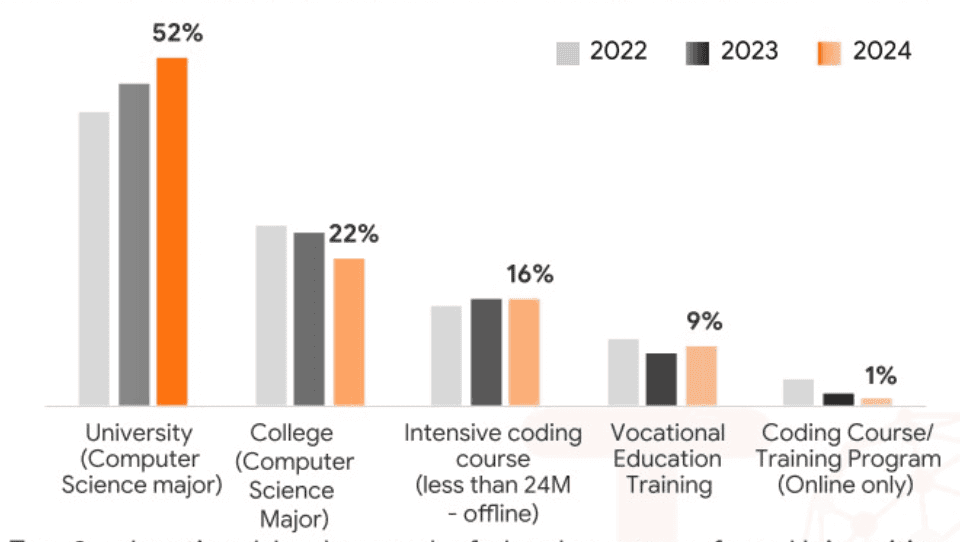
- Top 2 educational backgrounds of developers are from Universities (52%) and Colleges (22%) having IT-related or computer sciences majors.
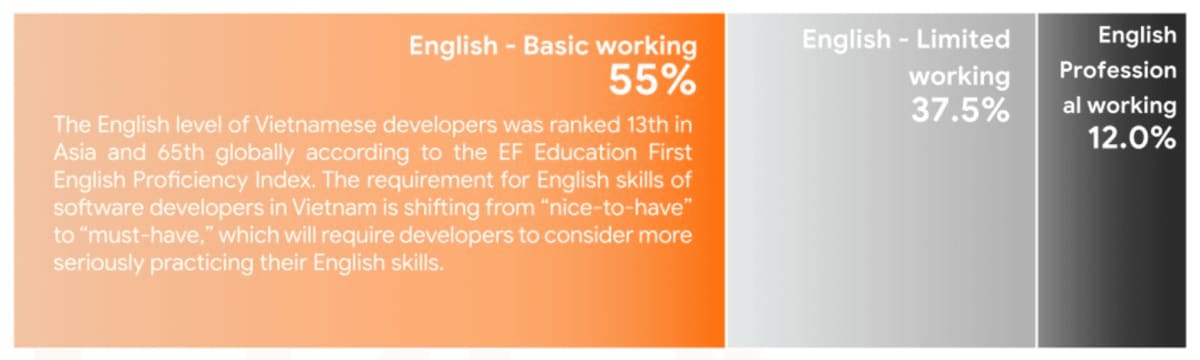
- Many developers are fluent in English, particularly in tech-focused universities and outsourcing firms.
Cost Efficiency Without Quality Compromise
- Vietnam provides significant cost savings on salaries, office space, and operational expenses while maintaining high productivity.
- Outsourcing to Vietnam can reduce development costs by up to 60% compared to Western markets.
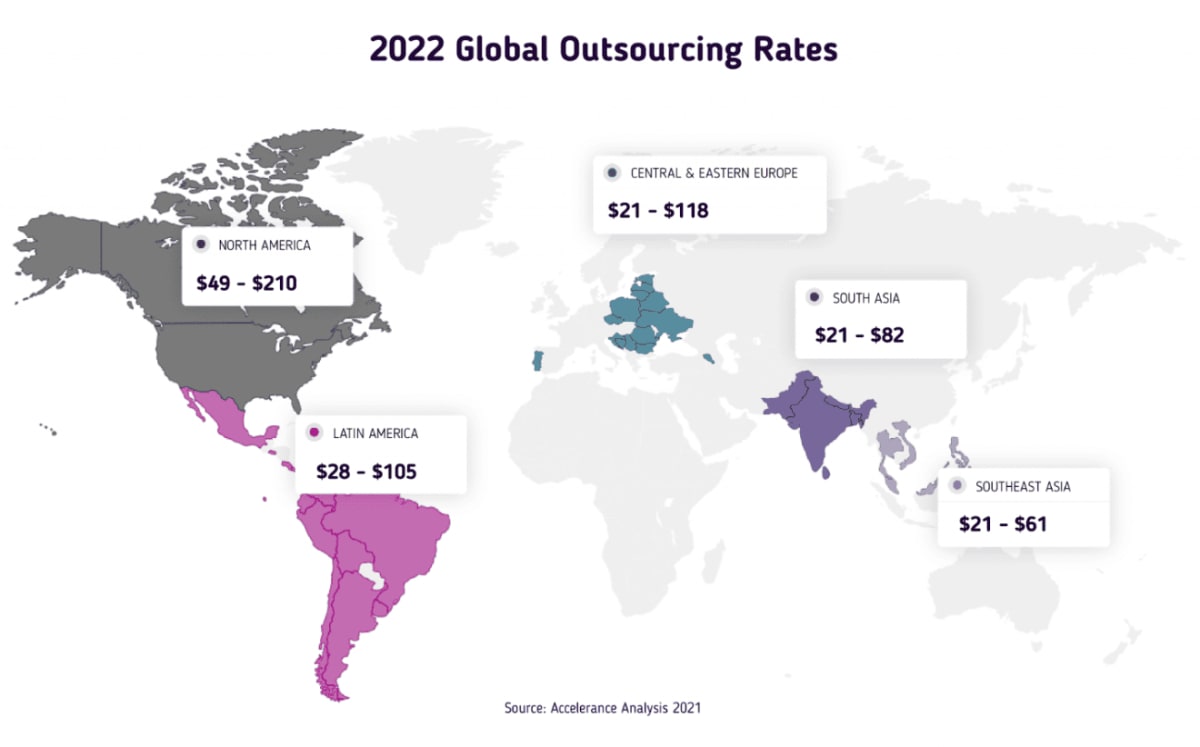
Labor Cost 2021, Accelerance Analysis
Government Incentives and Business-Friendly Policies
- The Vietnamese government actively promotes the IT sector through tax incentives, grants, and infrastructure development.
- Corporate tax exemptions are available for tech startups and IT service providers in special economic zones.
Thriving Tech Ecosystem
- Vietnam has over 3,000 startups, making it one of the fastest-growing tech ecosystems in Southeast Asia.
- Strong networks of co-working spaces, accelerators, and venture capital firms provide ample opportunities for collaboration.
Understanding Different Models for Building a Tech Team in Vietnam
Selecting the right approach to building a tech team in Vietnam depends on your business goals, project scope, budget, and level of control you require. Below is a detailed breakdown of each model and its advantages.
An Offshore Development Center functions as an extended branch of a company’s in-house team but operates in Vietnam. This model is best suited for companies seeking a long-term presence in the country with dedicated resources, infrastructure, and management.
- Best for: Companies with long-term or complex projects requiring continuous oversight and deep integration with internal operations.
- Advantages: Full control over the team, cost-efficient development, and scalability without managing day-to-day HR and operational tasks.
- Challenges: Requires time to establish processes, integrate teams, and align workflows between onshore and offshore teams.
This model involves hiring a team of developers who work exclusively on a company’s projects but are managed externally. The team operates as an extension of the client’s organization, aligning with their goals, processes, and culture.
- Best for: Businesses that need a long-term, specialized team without managing local hiring and operations.
- Advantages: Ensures consistency and deep domain expertise, leading to better project outcomes. Offers flexibility in scaling without committing to a full in-house team.
- Challenges: May require time to integrate with the company’s processes and culture, depending on communication and management structure.
This approach enables companies to add skilled professionals to their in-house team on a temporary or long-term basis, addressing talent shortages without committing to full-time hires. The augmented team members work alongside the company’s existing staff, helping to fill specific skill gaps.
- Best for: Companies that need additional expertise for short-term projects or to scale quickly without long hiring cycles.
- Advantages: Provides flexibility in workforce scaling, faster onboarding, and cost savings compared to in-house hiring.
- Challenges: Requires coordination between augmented staff and internal teams to ensure seamless collaboration and alignment with company processes.
4. Building-Operate-Transfer (BOT) Model
This model allows companies to establish their own offshore development center in Vietnam with the help of a local service provider. Initially, the provider handles everything from hiring to operations. Over time, the client takes full ownership of the center.
- Best for: Businesses planning to establish a long-term development presence in Vietnam but looking to minimize initial risks and operational challenges.
- Advantages: Reduces the burden of setting up a local entity while allowing a smooth transition to full ownership. Ideal for companies that want a gradual, structured approach to offshore expansion.
- Challenges: Requires a long-term investment and commitment, as the transition from the outsourcing provider to in-house management needs careful planning.
5. Fixed Price Model
Under this model, all project requirements, timelines, and costs are determined in advance. The outsourcing provider delivers the project based on these predefined conditions.
- Best for: Companies with well-defined project scopes and clear deliverables.
- Advantages: Ensures cost predictability, reduced financial risk, and straightforward project management.
- Challenges: Limited flexibility if project requirements change mid-way, making it less suitable for evolving or innovative projects.
This flexible approach allows companies to pay for the actual time and resources used in a project. It’s best suited for projects where requirements may evolve over time.
- Best for: Businesses that need ongoing development and want the ability to adjust scope, priorities, and workload.
- Advantages: High flexibility, adaptable to changing project needs, and allows continuous iteration and improvements.
- Challenges: Costs can be harder to predict compared to a fixed-price model, requiring close monitoring of resource allocation.
In this approach, the outsourcing provider takes full responsibility for delivering a specific project. The client outlines the objectives, and the provider handles development from start to finish.
- Best for: Companies that need an end-to-end solution for a well-defined project.
- Advantages: Less management effort required from the client, structured workflows, and clear timelines.
- Challenges: Less control over the development process, making it more challenging to introduce changes once the project is underway.
Cost, Talent, and Scalability: Why Vietnam is a Prime Location for Tech Team Expansion
Expanding a tech team requires a balance between cost efficiency, access to skilled talent, and the ability to scale. Vietnam has become an increasingly attractive destination for global companies due to its competitive advantages in these key areas.
1. Significant Cost Savings
Vietnam offers a 50% reduction in development costs compared to hiring developers in the US or Western Europe. Lower living expenses, competitive salaries, and a thriving outsourcing industry make it an ideal choice for companies looking to maximize their budgets without compromising on quality.
2. A Large and Growing Talent Pool
With over 530,000 IT professionals and 57,000 new graduates annually from top technical universities, Vietnam provides a steady pipeline of skilled developers. The workforce is highly adaptable, with expertise in various programming languages and modern technologies, making it easier for companies to find the right talent.
3. Government Support for IT Growth
Vietnam’s government actively supports the tech industry with tax incentives, investment-friendly policies, and IT-focused regulations. These measures encourage foreign businesses to set up operations and contribute to a stable and business-friendly environment.
4. Scalability and Growth Potential
Vietnam’s robust infrastructure and expanding workforce allow companies to scale their operations efficiently. Whether building a small development team or setting up a large offshore center, businesses can adjust their resources as needed without significant delays or constraints.
With a cost-effective workforce, strong talent pipeline, and government-backed growth initiatives, Vietnam continues to solidify its position as a premier destination for tech team expansion.
Everything You Need to Know About Setting Up a Tech Team in Vietnam
Vietnam has become an increasingly attractive destination for businesses looking to build tech teams. With a growing talent pool, cost advantages, and strong government support for the IT sector, many companies are establishing or expanding their teams in Vietnam. However, success depends on careful planning across multiple areas, from recruitment and management to compliance and cultural alignment.
1. Defining Business Needs and Project Scope
Before hiring, it’s essential to define business objectives and technical requirements clearly. This involves:
- Identifying the type of software or solutions being developed. Are you building a mobile app, a web-based platform, or an AI-driven system?
- Determining the key technical skills needed. Does the project require front-end and back-end developers, cloud engineers, DevOps specialists, or data scientists?
- Setting a realistic budget and timeline. A well-planned roadmap ensures that resources are allocated efficiently.
- Choosing the right team structure. Depending on the project size and complexity, companies may opt for a small in-house team, an extended offshore team, or full outsourcing to a development partner.
If you didn't clear your goals, you can start with the question: Why should you hire a Technology Partner?
2. Determining the Right Team Size
The number of developers should match project complexity and workload. Here’s a general guideline:
- Small projects: 2–3 developers for short-term tasks or prototypes.
- Medium-sized projects: 5–10 developers, often including designers, testers, and project managers.
- Large-scale projects: 10+ developers, requiring well-defined team structures with dedicated roles like architects, product owners, and QA leads.
Expanding the team too quickly can lead to coordination challenges, higher costs, and management overhead. A gradual scaling approach allows businesses to maintain efficiency while adapting to project demands.
3. Matching Skills and Experience to Project Needs
The right balance of expertise ensures productivity without exceeding budget constraints. Common hiring strategies include:
- Junior developers (0–2 years of experience): Suitable for basic coding tasks, UI implementation, and testing.
- Mid-level developers (3–5 years of experience): Capable of handling feature development, database management, and API integration.
- Senior developers (5+ years of experience): Responsible for system architecture, performance optimization, and complex problem-solving.
For businesses requiring specialized skills like AI, blockchain, or cybersecurity, hiring experienced engineers or partnering with specialized outsourcing firms may be more effective.
4. Aligning Culture and Work Processes
Building an offshore tech team isn’t just about technical skills—it’s also about how well the team integrates into the company’s culture and workflows.
- Vietnamese developers are known for their adaptability, technical proficiency, and willingness to learn.
- Establishing a strong company culture from the beginning ensures seamless collaboration with global teams.
- Using agile methodologies (e.g., Scrum, Kanban) and project management tools (e.g., Jira, Trello, Confluence) improves workflow efficiency.
A key decision is whether to establish an offshore development center (ODC) or work with an outsourcing partner.
- An ODC offers long-term control over team structure, security, and culture.
- A software development partner provides flexibility, faster team scaling, and lower administrative burdens.
5. Establishing Strong Leadership and Management
Effective leadership is crucial for team success. Consider:
- Appointing local managers who understand both Vietnamese work culture and international business standards.
- Assigning clear roles and responsibilities to ensure accountability.
- Implementing mentorship programs to enhance knowledge transfer and career growth.
Strong leadership fosters motivation, reduces turnover, and ensures alignment with business goals.
6. Ensuring Clear Communication and Team Cohesion
Communication is often one of the biggest challenges in offshore team collaboration. To overcome this:
- Set up daily or weekly stand-up meetings to track progress and address roadblocks.
- Use collaboration tools like Slack, Microsoft Teams, or Zoom to ensure real-time updates.
- Encourage a culture of open feedback and continuous improvement to build trust and engagement.
Team-building activities, both online and in-person, help strengthen relationships and improve teamwork.
In order to avoiding communication barriers, you can take a look at Best Communication Tools with Your Offshore Development Team
7. Managing Budget and Operational Costs
While Vietnam offers cost advantages, businesses must consider the total cost of ownership (TCO) for building a tech team.
- Salaries: Developers in Vietnam earn significantly less than in the US or Western Europe, but wages vary by experience and location (e.g., Ho Chi Minh City vs. Da Nang).
- Office space and equipment: Leasing costs depend on city and office size.
- Employee benefits: Competitive packages include health insurance, training, and performance bonuses to attract top talent.
- Retention strategies: High turnover can lead to additional recruitment and training costs, so offering long-term incentives is essential.
For companies on a tight budget, working with an outsourcing provider on a fixed-cost or hybrid model can be a viable alternative.
8. Understanding Local Regulations and Compliance
Legal and compliance factors must be addressed to avoid operational risks. Key considerations include:
- Labor laws: Vietnam has strict employment regulations, including mandatory social insurance contributions and probation periods.
- Taxation: Companies must comply with corporate tax rates, VAT, and employee income tax policies.
- Intellectual property (IP) protection: Businesses working with sensitive data should ensure clear legal agreements to safeguard proprietary information.
- Data security and international compliance: If handling global data, companies must align with GDPR and other data protection regulations.
Seeking legal and HR consulting services can help navigate Vietnam’s regulatory landscape more effectively.
Build Your Tech Team in Vietnam with INNOMIZE
Expanding your tech team in Vietnam requires the right expertise, local insights, and a reliable partner to navigate hiring, operations, and team management. At INNOMIZE, we provide tailored IT outsourcing, offshore development, and team augmentation services to help businesses scale efficiently.
Why Partner with INNOMIZE?
-
Access to Vietnam’s Top Tech Talent – We connect you with skilled software engineers, QA specialists, and project managers who match your specific needs.
-
Flexible Engagement Models – Whether you need a dedicated development team, an offshore development center (ODC), or project-based outsourcing, we offer solutions that fit your business model.
-
Cost-Effective & Scalable Solutions – Vietnam’s competitive IT market allows you to optimize costs while maintaining high-quality development standards.
-
Hassle-Free Setup & Operations – We handle recruitment, onboarding, payroll, and compliance, so you can focus on product development and business growth.
-
Seamless Team Integration – We ensure smooth collaboration between your in-house and offshore teams through efficient communication and project management.
Let’s build your dream tech team in Vietnam. Partner with INNOMIZE today to start your journey toward scalable and cost-effective software development! 🚀