When in need of IT services, business owners are faced with choosing to hire an employee, freelancer, or an IT partner. Because each type of worker has unique pros and cons, there is no universal answer for all companies. As such, it can be challenging to determine which is the best choice for a software project development.
To help narrow down your options, we created a guide to walk you through what freelancers, in-house team members, and IT partners are, along with their differences and factors to consider when choosing between them.
Defining Freelancers, In-House Team, and IT Partners

Before we delve into the differences between hiring a freelancer, in-house team, and an IT partner, let’s first define what they are:
What is a Freelancer?
Freelancers are self-employed individuals who typically work on short-term projects for one or more clients. They don’t receive any employee benefits from their clients, thus paying their taxes.
Most freelancers work remotely, depending on the nature of the work they provide. However, they may meet with clients for meetings or consultations whenever needed.
One defining feature of freelancers is that they will set their own hours and rates, with the ability to work with multiple clients at the same time. This gives freelancers more freedom with how they structure their schedules and earnings, which is why the pool of freelancers in the IT industry is constantly growing.
How Do You Define an In-House Team?
Employees will work for one company permanently and are paid a fixed rate, either through an hourly rate or annual salary. They can either work remotely or in the office, hired to perform a designated role rather than working on one project. Moreover, they have dedicated work hours, employment terms, and responsibilities.
Unlike freelancers, companies provide benefits to employees, including healthcare, pension plans, and vacation time. They will also be responsible for their employees’ taxes and contributions.
Note that freelancers and in-house members are not to be mistaken for contractors, who are a different type of worker. Similar to freelancers, contractors will set their hours and rates. Moreover, they do not receive employee benefits and will pay their taxes.
However, contractors usually take on one client at a time as they work on larger, long-term projects, depending on the company’s needs. That is where they are similar to permanent employees, who provide a long-term commitment to the company.
What is an IT Partner?
An IT partner, also known as a tech partner, offers IT services and aims for digital transformation with the companies they work with through custom software development, cloud services. Partnerships with the top IT outsourcing company will vary in duration, but typically for long-term projects.
While the exact scope of an IT partnership will differ depending on the company’s needs, they will have access to a dedicated offshore team ready to provide tech support any time of the day.
The Differences Between Hiring Freelancers, Employees, and IT Partners
Knowing the definition of freelancers, in-house members, and IT partners already gives you an idea of what makes them different from one another. You can be more knowledgeable about the best choice for a software project development based on their pros and cons, which we relay below:
Pros and Cons of Freelancers
Working remotely with a freelancer has its pros and cons, with companies choosing them for their cost-effectiveness and time flexibility. Besides this, it’s also fairly easy to find freelancers to hire from the many available platforms.
Here are major benefits to consider:
✅ Time Flexibility: Freelancers are almost always flexible with their time, working at any time of the day. While in-house teams would work the standard 9-5, freelancers may be willing to work beyond that, as long as it is stipulated in their agreement. Many freelancers may also choose to work overtime if it means getting their work done quickly and effectively.
✅ Affordability: The major reason why companies opt for freelancers is because of their affordability. You won’t be paying for their taxes or other benefits, but for the work they charge for. This will help you save on the overhead expenses.
✅ Speedy Work: Freelancers usually work by contract, focusing on the end product. To earn more, they do their best to work efficiently, allowing you to have your projects completed on time.
✅ Expertise: Freelancers are experts in specific areas, while you can find a few who claim to be all-rounded when it comes to software development. As long as you do your research and go through the proper recruitment process, you can get the best IT talent for successful projects.
While freelancers have their advantages, there are a few disadvantages:
❌ Lack of Availability: While it’s more convenient to find freelancers through online platforms, you may also have trouble recruiting freelancers you want to work with due to availability issues. Top talents are usually vied for by other companies, so you’ll either need to wait or find another freelancer.
❌ Confidentiality: Confidentiality is one of the biggest threats when hiring a freelancer, especially when no contract is involved.
❌ Risk of Quality: The quality of the work done is not ensured by a freelancer. However, you can reduce this risk by reading up on past client reviews and ratings.
❌ No Maintenance: Freelancers are usually hired for short-term projects, being responsible for the project until the product is delivered. In case of any issues or update requirements, you will need to search for another freelancer or ask one of your in-house members for assistance.
❌ Limited: Remember, freelancers are more focused on the end product rather than the long-term effects. As a result, the work you receive may not be designed for success in the long run, and will only be seen as a commodity. Moreover, the range of services a freelancer offers may be limited, as most tend to be experts in one specific field. Because of this, you will only be able to avail of one service and need to hire more freelancers to get the rest of the tasks done.
Pros and Cons of an In-House team
Hiring an in-house IT staff for your company can bring the following benefits:
✅ Employee Loyalty: Full-time employees would be more loyal to the company they work for, as they have a sense of job stability and receive various benefits. When you treat your in-house team well, they will perform better and will continue working for your company for years to come.
✅ Quick Support: Because IT staff are already on office grounds, you are almost always guaranteed quick support. While IT partners and freelancers can provide quick support, they may be difficult to contact if they are in a different timezone or if their phones are busy. Plus, in case of any issues or matters, you can meet with your in-house staff through a face-to-face session, which can help resolve things quicker.
✅ Uniform IT Infrastructure: In-house IT staff means they will solely work with your systems, which makes it easier to resolve any issues and conduct daily IT-related tasks. You can also get complete control over the entire development process.
✅ Fits Company Culture: You can hire someone who fits the company culture. In-house team members who are in line with your company’s values can help with productivity and motivation.
With all that in mind, make sure you’re also aware of the cons:
❌ Time constraints: Full-time employees will work from 35 to 45 hours a week depending on the country, typically following the 9-5 work hours. In case of work issues outside office hours, in-house teams may not be able to address them until the next weekday morning.
❌ More training requirements: It will take time to find a competent in-house team to handle your software development needs. But even after you hire someone, it will take even more time for onboarding and training before they can begin working according to the company’s standards.
❌ Increase in labor costs: Full-time employees will incur more payroll expenses in the long run, as they will work more hours. Moreover, you are required to provide the appropriate benefits, including healthcare, sick leaves, and the like. That is why it’s important to hire an in-house team only if you are assured that there is a considerable return on investment.
Pros and Cons of IT Partners
Partnering with a software development company has numerous advantages, including:
✅ Suitability: IT partners are flexible, they can work for start-ups and big projects, making them a great option for companies of any size.
✅ Available Packages: Companies usually hire freelancers for a specific task or service. With an IT partner, you receive an entire package, which includes IT consulting, analysis, and idea evaluation before officially starting a project.
✅ Teamwork: Freelancers are usually a one-man band but when it comes to software development, you benefit more from a team. Tech partners will have a manager, developer, designer, and other necessary team members to complete a project successfully.
✅ Quality Assurance: Software development companies focus on providing quality work and services, with the aim to help your business succeed for the long term.
✅ Maintenance: Even after project completion, the work doesn’t stop there. As the name suggests, an IT partner will stand by your company and build a long-term relationship with you. As such, they will continue to maintain your software or website, providing the required updates and support to keep it running smoothly.
✅ Expertise: Software development companies employ top IT talents to keep their clients satisfied. Furthermore, they take on multiple projects and clients from different industries, making them experienced and well-knowledgeable with what they’re doing. Besides that, IT partners are always staying updated with the latest technologies and trends.
Are there disadvantages to hiring an IT partner? The major con is the fact there are numerous IT partners to choose one. You risk hiring the wrong one if you do not perform proper research.
Moreover, if the IT partner is in a different time zone, companies may have communication issues and receive delayed replies, which is a huge disadvantage when there is an urgent task or issue to resolve.
Factors to Consider When Getting the Right Partner
Now that you’re more familiar with what makes freelancers, in-house teams, and IT partners different, the next question is: Which is the best choice for a software project development? Here are important factors to look into so you can make the right choice:
1. Recruiting Process
Talent acquisition will require a significant investment of time and resources, especially when considering candidates from other countries.
It can take a few months to search and recruit a freelancer or in-house member. If the hired worker does not pass the trial period, you will need to restart the recruiting process.
An IT partner has a team of in-house experts who can begin working on your project right away. As a result, you will receive a dedicated offshore team with the relevant skillset and experience to provide software development services that can bring your business to success.
2. Security
Security is a crucial factor to consider, especially in the IT industry. In-house members are bound by a contract to never use or disclose confidential information and to use company-mandated security systems, so you are assured that your company’s information is safe and handled professionally.
This is where an IT partner differs, as they employ their security measures to reduce cybersecurity risks and unauthorized access by third parties. IT partners will also remain compliant with security standards including HIPAA, GDPR, ISO, or SOCK, adapting to your location’s security and compliance requirements. These are things not all freelancers can promise, as they may not have the complete necessary set of software or hardware.
3. Expertise
When you choose to recruit a permanent employee or freelancer for your company, you have control over who you onboard. That said, the responsibility of investing in your employee’s professional growth falls on you, from organizing training to obtain certifications to financial compensation when passing relevant examinations to further their education.
Freelancers usually do not spend as much time on training or passing certification exams unless stated otherwise. Moreover, selecting top IT talent from a pool of freelancers or applicants will take time and effort on your end.
On the other hand, a reputable IT partner already has a team of top IT talent on their hands, and they continue to invest in their employees’ education and professional growth. This is done not only to ensure success with all their clients’ projects but also to gain a competitive edge against other IT companies.
Furthermore, an IT company will conduct regular employee appraisals and make sure there are personal development plans set in place for in-house members to continue growing in their field. This can save businesses time in recruiting and maintaining the professional growth of their in-house IT staff.
4. Range of Services Offered
You must determine your project’s size before choosing to hire an IT partner, in-house team, or freelancer. If you have a big project that will start from scratch, you will need more than just one IT consultant or freelancer. Freelancers tend to be limited in terms of their area of expertise, which can be an issue depending on the complexity of your project.
Full-cycle software development is a long, complex process that involves preliminary requirements analysis, research, design and development stages, quality assurance, and more. This will require the expertise of an entire team, from a project manager to software developers and engineers. While you can hire an in-house team, you will need to make a significant investment of time and money to find top talents and pay for their benefits.
Because of this, it will be simpler to hire an IT partner who already has a development team and in-house specialists prepared to take your project on. After the initial consultations, the IT partner will be ready to start your project, saving you more time and energy that can be spent conducting other business-related tasks.
Besides software development, an IT partner will also provide IT consulting services to help with your long-term growth even after project completion. You can receive feedback and advice on market research, business analysis, user experience and testing, and more.
However, if you only have minor development tasks, this is where a freelancer can be a viable option.
5. Knowledge Sharing
The collective experience and knowledge sharing by a competent offshore team is what makes IT partners a sound choice. You will not only need one software developer for your project but multiple specialists who can collaborate to resolve issues or improve the project workflow.
Permanent employees will also be able to collaborate with their team members through regular meetings. As for freelancers, they usually don’t count on outside help or advice, performing their duties on their own.
6. Legal Support
Working with a freelancer, especially from a different country, will require companies to familiarize themselves with the legislative framework, taxation laws, and contractual documentation of the individual’s country.
With a tech partner, most of the legal workload is taken away from you, as they will take care of all the agreements between the company and in-house team. They will guarantee legality with a non-disclosure agreement and contracts with clear intellectual property clauses.
Most IT service providers have in-house lawyers and finance departments who will deal with their employees’ taxes and financial reporting. Because of this, you won’t need to be involved with these issues, saving you even more time and energy.
7. Rates
Hiring a freelancer seems to be the most cost-effective solution compared to hiring an in-house member as you won’t have to worry about paying for health insurance, corporate activities, and office management, among others.
That said, you don’t get the flexibility and range of services you need from a freelancer compared to an IT partner. In the long term, IT partners can provide a greater return on investment with varying cooperation models to fit your budget and needs.
You can get a quotation made for your specific requirements, including the project development duration and innovation ideas from the experts. An IT partner’s rates will already include an administrative fee covering the outsourced team’s salary, corporate activities, and other benefits, which ensures that you have a motivated team of specialists who will help scale your business.
8. Risks
When hiring a freelancer, there is a risk of hiring someone who will not complete the project within the specified budget and deadline. Freelancers do not have the level of commitment an in-house team or IT partner would have, with some of them opting to stop cooperation at any stage.
If you choose to hire a reputable IT partner, you receive a long-term commitment. In case there are any issues with IT consultants or project failure, your IT partner will agree to bear the risks. Some IT partners also offer warranties for your assurance.
9. Scalability
What are your plans in terms of business growth? Of course, you will want to work with someone sharing the same mindset and business direction, which is where hiring an employee or IT partner is advantageous.
Freelancers usually do not have the ability or resources to scale your business in the long run. Whereas with an IT partner, they have everything necessary to accelerate the development process and complete projects in a timely manner. They are also more flexible in case of any changes and other special requests, so there won’t be major issues regarding your project timeline and quality.
Wrapping It Up
If you require extra assistance for software development, cloud consulting, or other IT-related services, you may greatly benefit from partnering with the top IT outsourcing company. An IT partner can provide the combination of benefits a freelancer and in-house team offer, with the assurance of a quality team ready to work with you for the long term. As such, IT partners may be your best choice for a software project development.
The only issue? Determining the best IT partner to hire. That’s where we at Innomize come along, using the latest technology trends to provide innovative solutions. We cover various services necessary for a company’s success, from IT consulting to software development and integration.
Don’t wait any longer and book a schedule with one of our consultants to discuss your needs!
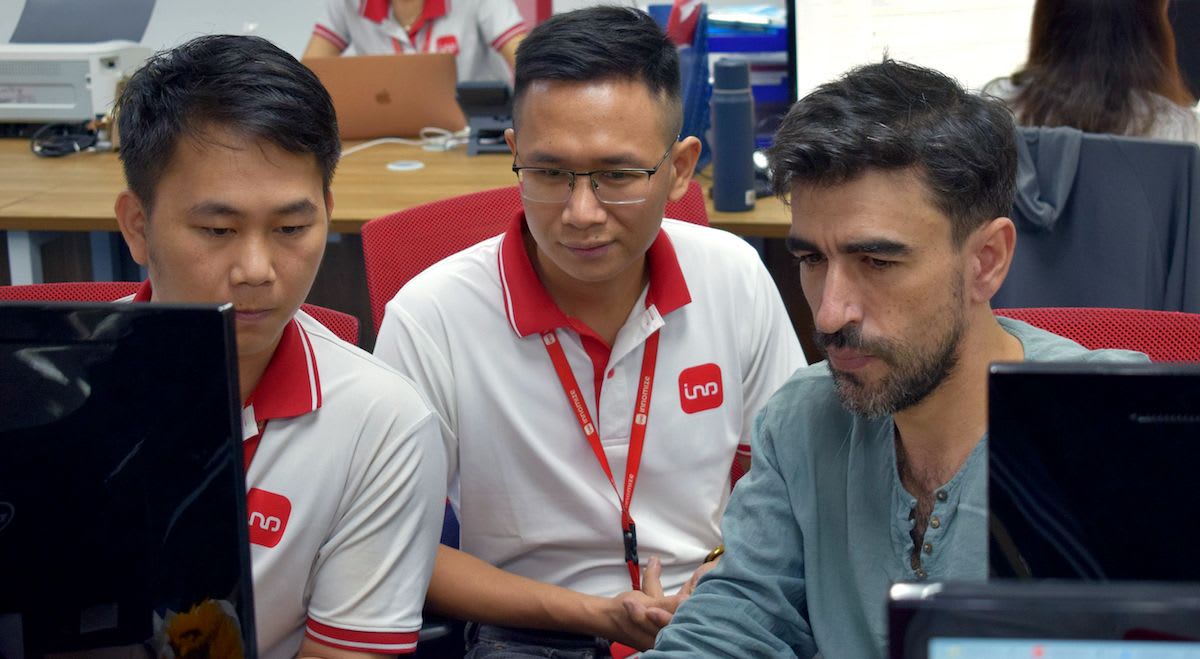
At INNOMIZE, we work closely with you, fostering open communication and collaboration throughout the entire project lifecycle, to ensure we fully understand your requirements and deliver top-notch software and IT solutions that are customized to your unique business needs.
Read now our client's testimonials on Clutch, we will work alongside as your dedicated team, to develop your business' success.