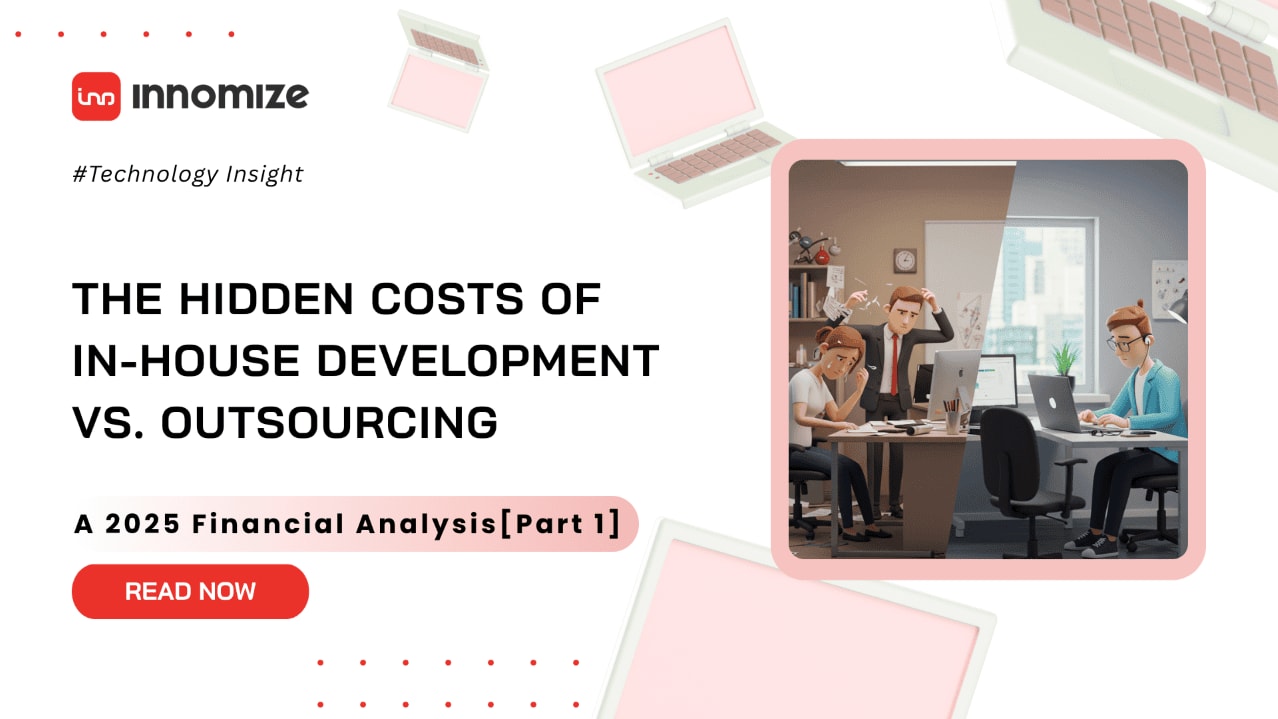
In Part 1 of this series, we revealed the shocking truth about in-house development costs: what appears to be an $80,853 salary can actually cost up to $248,000 in the first year when you factor in all hidden expenses. Now, let's explore how outsourcing compares and provide you with a comprehensive framework for making this critical strategic decision.
The True Economics of Outsourcing
Direct Cost Advantages
By hiring outsourcing developers, a company can reduce the cost of developing a web or mobile application by up to 60%, without sacrificing quality. This significant cost reduction stems from several factors that extend beyond simple labor arbitrage.
Immediate Cost Savings
- The average rate in outsourcing is $50-$100 per hour, per person (in Europe & the USA, the rate depends on the country)
- No recruitment costs or hiring delays
- No employee benefits or payroll taxes
- No infrastructure or equipment investments
- No office rent, no hardware or licenses to purchase, no HR or administrative burden
Regional Cost Variations and Value Propositions
Asia Advantages
- Senior developer rates: $20-$35 per hour
- Strong English proficiency and cultural compatibility
- Favorable time zone overlap for US and European clients
- Government support for IT services and outsourcing industries
- Growing pool of specialized talent in emerging technologies

Europe Benefits
- Senior developer rates: $40-$80 per hour
- Strong technical education systems and expertise
- Cultural alignment with Western business practices
- EU compliance and regulatory familiarity
- Advanced expertise in complex enterprise applications

Latin America Opportunities
- Senior developer rates: $30-$60 per hour
- Convenient time zone alignment with North American businesses
- Strong nearshore collaboration capabilities
- Growing technology hubs and startup ecosystems
- Competitive English proficiency levels

Accelerated Time-to-Market Benefits
Outsourcing can drive up to 40% in cost savings by allowing businesses to tap into a global talent pool of over 500,000 specialized developers, accelerating time-to-market by up to 50%. This acceleration translates to significant competitive advantages and revenue opportunities.
Development Speed Advantages
- Immediate team availability and project initiation
- 24/7 development cycles through global team distribution
- Specialized expertise readily available without training delays
- Proven development methodologies and best practices
- Reduced project setup and infrastructure preparation time
Business Impact Metrics
By outsourcing its software development, the firm cut costs by 20%, but more importantly, it launched new features twice as fast, gaining a 30% increase in customer retention through:
- Earlier revenue generation through faster product launches
- Competitive advantage through rapid feature deployment
- Reduced opportunity costs from delayed market entry
- Enhanced customer satisfaction through consistent delivery schedules
Comprehensive Financial Analysis: A Real-World Case Study
Scenario: Mid-Size SaaS Company Development Team
Let's examine a practical scenario where a growing SaaS company needs to build a 5-person development team for a 12-month project.


Advanced Financial Modeling: 3-Year Projection

Outsourcing Risk Management
Quality Control and Communication
- Mitigation Strategy: Establish clear communication protocols and regular check-ins
- Best Practice: Implement agile development methodologies with frequent deliverables
- Quality Assurance: Define comprehensive testing and acceptance criteria
- Performance Monitoring: Use project management tools for real-time visibility
Intellectual Property and Security
- Legal Framework: Comprehensive NDAs and IP assignment agreements
- Security Protocols: End-to-end encryption and secure development environments
- Compliance Standards: Ensure adherence to relevant industry regulations
- Access Controls: Implement role-based access and regular security audits
Cultural and Time Zone Considerations
- Cultural Alignment: Choose partners with compatible business cultures and practices
- Communication Overlap: Ensure adequate time zone overlap for real-time collaboration
- Language Proficiency: Verify English proficiency levels for effective communication
- Project Management: Implement asynchronous workflows and documentation practices
Strategic Decision Framework
When In-House Development Makes Sense
Strategic Control Requirements
- Core intellectual property and competitive advantage development
- Highly sensitive or regulated industry applications
- Long-term product roadmap with continuous development needs
- Complex integration requirements with existing systems
Financial Considerations
- Large-scale, multi-year development initiatives
- Available internal funding for infrastructure investments
- Established recruitment and retention capabilities
- Lower overall cost due to economies of scale
Organizational Capabilities
- Existing strong technical leadership and management
- Proven track record in team building and retention
- Adequate office space and infrastructure
- Strong HR and administrative support systems
When Outsourcing Delivers Maximum Value
Time-to-Market Pressures
- Rapid development and deployment requirements
- Limited internal development capacity
- Seasonal or project-based development needs
- Competitive pressure requiring accelerated delivery
Cost Optimization Goals
- Startup or scale-up companies with limited capital
- Need for specialized expertise without long-term commitment
- Outsourcing offers greater short-term cost efficiency — you pay for the service without bearing the overhead associated with full-time employees
- Geographic expansion requiring local market knowledge
Risk Mitigation Strategies
- Diversification of development resources and capabilities
- Access to global talent pools and specialized skills
- Reduced hiring and retention risks
- Flexible scaling based on business needs
Regional Spotlight: Vietnam as a Strategic Outsourcing Destination

Competitive Advantages
Cost-Effectiveness Combined with Quality
- Highly competitive hourly rates ($20-$45 for senior developers)
- Strong educational system producing skilled technical graduates
- Government investment in technology infrastructure and training
- Growing reputation for quality and reliability in software development
Cultural and Business Compatibility
- Strong English proficiency across technical teams
- Western business practices and communication styles
- Time zone advantages for both US and European clients
- Growing startup ecosystem and entrepreneurial culture
Technology Expertise and Specialization
- Emerging strengths in AI, machine learning, and data analytics
- Strong mobile development and cloud computing capabilities
- Growing expertise in fintech, healthcare, and e-commerce applications
- Investment in emerging technologies and innovation hubs
Maintenance Cost Comparison
Outsourced Maintenance Advantages
On average, firms can expect to spend from $200 to $500 per month on maintenance with outsourcing, compared to $200,000-$400,000 annually for in-house teams. Benefits include:
- Predictable monthly costs with clear service level agreements
- Access to specialized expertise without full-time hiring
- 24/7 support availability across multiple time zones
- Scalable support based on actual needs and usage
Future Trends and Considerations for 2025
Emerging Cost Factors
AI and Machine Learning Integration
- Increasing demand for AI/ML expertise driving rate premiums
- Investment in AI development tools and platforms
- Training costs for emerging AI technologies and frameworks
- Integration complexity with existing systems and workflows
Cybersecurity and Compliance Requirements
- Enhanced security protocols and compliance frameworks
- Investment in security tools and monitoring systems
- Regular security audits and penetration testing
- Privacy and data protection compliance costs
Strategic Planning Recommendations
For Startups and Scale-ups
Outsourcing provides the most effective path to product development while preserving capital and accelerating growth. The cost savings and flexibility enable longer runways and faster iteration cycles.
For Enterprise Organizations
A hybrid approach combining core in-house teams with strategic outsourcing partnerships delivers optimal results. This model provides strategic control while accessing specialized expertise and cost efficiencies.
For Project-Based Development
Outsourcing offers clear advantages for defined-scope projects, providing predictable costs, accelerated delivery, and access to specialized skills without long-term commitments.
Conclusion: Making the Strategic Choice for 2025
The decision between in-house development and outsourcing extends far beyond simple cost comparisons. Our comprehensive analysis reveals that while in-house development offers strategic control and cultural alignment, the hidden costs can increase total project expenses by 40-60% above initial estimates.
Outsourcing, particularly to strategic locations like Vietnam, offers compelling advantages:
- Immediate cost savings of 25-40% on development projects
- Accelerated time-to-market by up to 50%
- Access to global talent pools and specialized expertise
- Reduced operational complexity and administrative overhead
- Scalable resource allocation based on project needs
The key to success lies not in choosing between in-house and outsourcing, but in strategically leveraging both approaches to optimize costs, accelerate delivery, and build sustainable competitive advantages in an increasingly complex technology landscape.
As we move deeper into 2025, organizations that master this strategic balance—combining the control and alignment of in-house development with the efficiency and expertise of strategic outsourcing partnerships—will be best positioned to thrive in the digital economy.
Ready to optimize your development costs while accelerating time-to-market?
INNOMIZE provides transparent, cost-effective development solutions that deliver measurable ROI. Contact us for a comprehensive cost analysis tailored to your specific project requirements and strategic objectives.