Building a mobile app in 2025 can cost anywhere from $20,000 to over $500,000, depending on its complexity, features, and development team. Many businesses and entrepreneurs struggle with budgeting for app development because costs vary significantly based on:
- The type of app (e-commerce, social media, fintech, healthcare, on-demand services, etc.)
- The technology stack (native vs. cross-platform, AI, blockchain, cloud integration)
- The location and expertise of the development team (North America, Europe, Asia)
- Ongoing expenses like maintenance, hosting, and marketing
This guide will break down each cost factor to help you estimate your app development budget more accurately.
Want to stay updated on mobile app trends? Check out our article: Mobile App Development Trends for 2025: What's Next?
1. Factors That Affect App Development Costs
1.1 App Complexity
The complexity of an app is the most important factor in determining its cost. A simple to-do list app and a full-fledged social media platform are miles apart in terms of development effort, time, and budget.

Basic Apps ($20,000 – $50,000, 2 – 4 months)
These apps have limited functionality and typically include:
- Static screens with basic navigation
- Simple input fields (e.g., to-do lists, calculators)
- No backend or cloud integration
- Minimal design customization
Example: A personal finance tracking app that allows users to input their expenses and categorize them, but without cloud syncing or AI-based recommendations.
Medium Complexity Apps ($50,000 – $150,000, 4 – 8 months)
These apps include more interactive features, requiring backend development and third-party integrations such as:
- User authentication (Google, Facebook login)
- Payment processing (Stripe, PayPal)
- Push notifications
- Real-time database interaction (Firebase, PostgreSQL)
- Custom UI/UX elements
Example: A food delivery app that allows users to browse menus, place orders, make payments, and track delivery in real-time.
Complex Apps ($150,000 – $500,000+, 8 – 18 months)
These apps include advanced technology and AI-driven features, such as:
- Artificial Intelligence (AI) & Machine Learning (personalized recommendations, chatbots)
- Augmented Reality (AR) & Virtual Reality (VR) (interactive shopping experiences, gaming)
- Blockchain & Smart Contracts (secure payments, NFT marketplaces)
- Real-time features (instant messaging, live streaming, stock trading)
Example: A ride-sharing app like Uber, which requires:
- Live GPS tracking
- Dynamic pricing calculations
- Driver-rider matching algorithms
- In-app payments with multiple gateways

1.2 How the Development Process Impacts Costs
Beyond app complexity, the different stages of development contribute to the total cost. The project starts with planning and research, where businesses define goals, target audiences, and technical requirements. While this stage accounts for only 10-15% of the total cost, it prevents expensive mistakes later.
The next phase is UI/UX design, where developers create wireframes and user interfaces. This takes up 15-20% of the budget. The development phase—including frontend and backend coding—represents the largest expense, making up 40-50% of the total cost. Testing and quality assurance (QA) ensure that the app runs smoothly, adding 10-15% to the budget. Finally, deployment and maintenance involve launching the app and providing updates, requiring ongoing costs.

Efficient planning and prioritizing essential features help businesses control costs and prevent unnecessary expenses during development.
1.3 UI/UX Design Costs
A well-designed app improves user engagement and retention. However, design costs vary depending on complexity:
Basic UI ($5,000 – $15,000)
- Uses pre-built templates with limited customization
- Simple color schemes and basic buttons
- No complex animations
Example: A budget calculator app with just a few screens and minimal branding.
Custom UI/UX ($15,000 – $50,000)
- Custom animations and transitions
- Personalized branding elements (custom icons, typography)
- User-centered design with prototyping & A/B testing
Example: A fitness tracking app with an engaging dashboard, animated progress bars, and dark mode support.
Advanced UI/UX & Research ($10,000 – $30,000)
- Extensive user research and usability testing
- Wireframing & prototyping before development
- Accessibility features (voice control, screen readers)
Example: An enterprise-level app used for stock trading, requiring a clean UI with real-time stock price updates.

1.4 Features & Technology Stack
The choice of technologies and features heavily influences development costs.
Native vs. Cross-Platform Development
- Native (Swift/Kotlin): Best performance but higher cost (requires separate codebases for iOS & Android).
- Cross-Platform (Flutter/React Native): More cost-efficient but might sacrifice performance.
Backend Development
- APIs & Database Setup: Essential for storing and retrieving user data.
- Cloud Hosting: AWS, Google Cloud, or Azure for scalability.

2. Cost Breakdown by App Type
Each app type requires different features, infrastructure, and technology, which significantly affect costs. Below is a detailed breakdown of various app types, their features, and why costs vary.

2.1 Basic Utility Apps ($20,000 – $50,000, 2 – 4 months)
These apps focus on one or two core functions and have a simple user interface. They don’t require a backend or complex features.
Typical Features:
- Basic UI with static pages
- Local data storage (no cloud syncing)
- Simple form inputs and calculations
- No real-time updates or interactions
Examples:
- Calculator App – Users input values, and the app provides instant calculations.
- Flashlight App – Turns the phone’s flashlight on/off.
- Basic To-Do List – Users can add and check off tasks, but data is stored locally.
Why do costs vary?
- Pre-built UI vs. Custom UI – If you use a ready-made design, costs are lower.
- Offline vs. Cloud Syncing – Adding cloud storage increases costs.

2.2 E-commerce Apps ($50,000 – $200,000, 4 – 8 months)
These apps allow users to browse, search, and purchase products or services. They require secure payments, order tracking, and inventory management.
Typical Features:
- User authentication (email, Google, Facebook login)
- Product catalog with categories and filters
- Shopping cart and secure checkout
- Payment gateways (Stripe, PayPal, Apple Pay, Google Pay)
- Order tracking with notifications
- Admin panel for managing inventory
Examples:
- Amazon-like marketplace – Large catalogs, reviews, recommendations
- Clothing brand app – Showcases products, offers promotions
- Food ordering app – Customers browse menus, place orders
Why do costs vary?
- Number of products – A small boutique vs. a global marketplace has different infrastructure needs.
- Payment methods – Supporting multiple gateways requires additional development.
- Custom UI vs. Template UI – Unique branding and animations add design costs.

2.3 On-Demand Service Apps ($80,000 – $250,000, 6 – 12 months)

These apps connect users with service providers in real time, like Uber, DoorDash, or Fiverr.
Typical Features:
- Two-sided marketplace (users & providers)
- GPS tracking for real-time updates
- In-app messaging and notifications
- Secure payments and tipping system
- User ratings and reviews
Examples:
- Ride-hailing (Uber, Lyft) – Real-time driver matching, fare calculation
- Food delivery (DoorDash, UberEats) – Restaurant selection, live order tracking
- Home services (TaskRabbit, Handy) – Booking professionals for cleaning, repair, etc.
Why do costs vary?
- Real-time GPS – Requires Google Maps API integration.
- AI-based matching – Advanced algorithms increase complexity.
- Multi-user roles – Apps must support both customers and providers.

2.4 Social Media Apps ($100,000 – $300,000, 8 – 18 months)
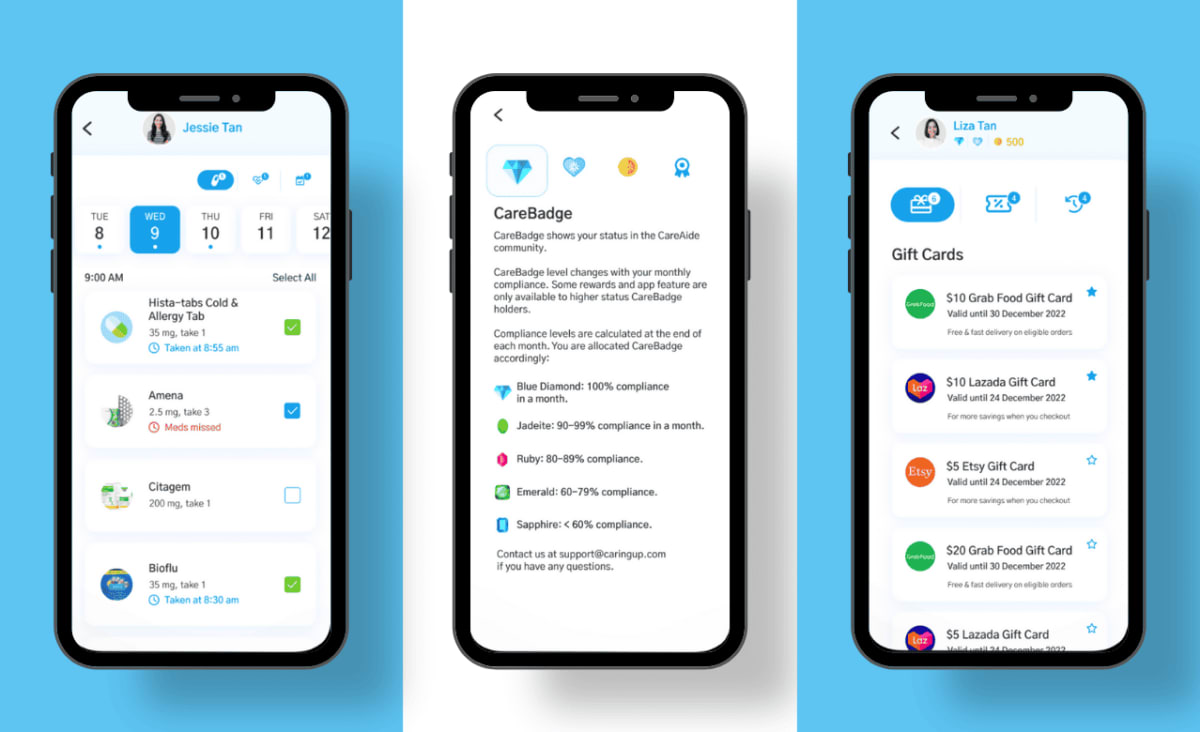
Social media platforms enable user-generated content, real-time interactions, and social networking features.
Typical Features:
- User profiles & posts (text, images, videos)
- Friend/follow system
- Real-time chat and notifications
- Algorithm-based feeds
- Content moderation tools
Examples:
- Instagram-like app – Image sharing, story updates
- Twitter-like app – Microblogging, trending topics
- TikTok-style video app – Video feed, AI recommendations
Why do costs vary?
- AI-powered feeds – Machine learning increases costs.
- Content moderation – Preventing spam & abuse requires extra development.
- Server scaling – High user traffic needs cloud-based infrastructure.
2.5 AI-Powered Apps ($150,000 – $500,000+, 10 – 24 months)
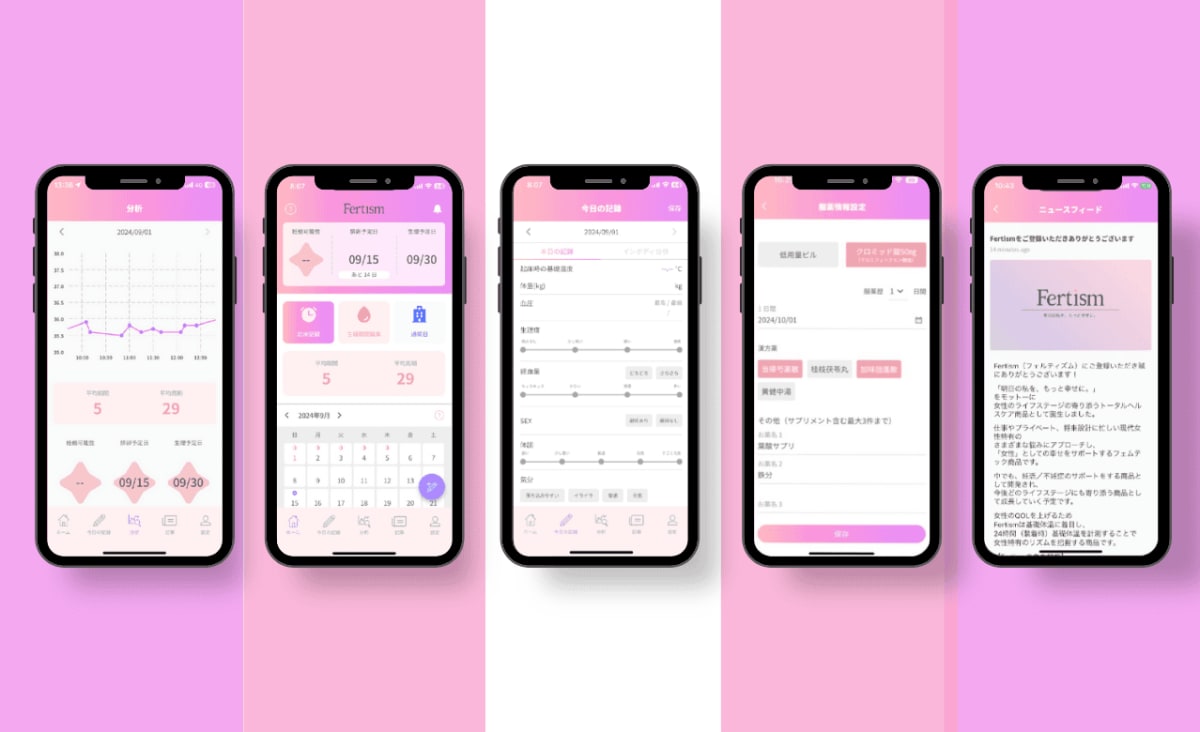
Apps that use AI and Machine Learning for automation, personalization, and advanced decision-making.
Typical Features:
- Chatbots & virtual assistants
- Recommendation engines (Netflix, Spotify)
- Predictive analytics (finance, healthcare)
- Speech & image recognition
Examples:
- Chatbot-powered customer service – AI responds to queries
- AI-powered shopping assistant – Personalized product recommendations
- Healthcare diagnosis app – AI analyzes medical data
Why do costs vary?
- Pre-trained AI vs. Custom AI – Developing proprietary AI is expensive.
- Data security & compliance – Healthcare and finance apps must follow strict regulations.

2.6 The Cost of Different Development Team Structures
The team you choose to develop your app also affects the cost. Businesses generally have three options: freelancers, in-house teams, or outsourcing agencies.
Freelancers are the cheapest option, with hourly rates as low as $15 per hour, but they may lack reliability for complex projects. In contrast, in-house development teams provide full control over the project but come with significantly higher costs, sometimes reaching $200 per hour per developer due to salaries, benefits, and infrastructure.
Outsourcing agencies offer a balance between cost and expertise. With hourly rates ranging from $20 to $100, they provide a full development team with specialized skills, making them the preferred choice for many companies.

Outsourcing agencies strike the best balance between affordability and quality, particularly for startups and mid-sized businesses.
3. Cost of Outsourcing by Location
Outsourcing costs differ based on geography, with North America and Western Europe at the high end, while South Asia and Southeast Asia offer lower-cost alternatives.
For example, hiring a North American developer costs $80–$200 per hour, making it the most expensive option. Western Europe follows closely behind with rates ranging from $70–$150 per hour.
In contrast, Eastern European countries like Ukraine and Poland provide skilled engineers for $30–$70 per hour. Meanwhile, South Asia (India, Bangladesh, Pakistan) and Southeast Asia (Vietnam, the Philippines, Indonesia) are the most cost-effective, with rates as low as $20–$50 per hour.

Given these factors, businesses seeking cost-effective yet high-quality outsourcing should consider countries like Vietnam, India, and Ukraine.
4. Why Vietnam, India, and Ukraine Are Top Outsourcing Destinations
Vietnam, India, and Ukraine stand out due to their skilled workforces, cost efficiency, and strong IT industries.
Vietnam has a booming tech ecosystem, government-backed IT growth, and competitive rates ($20 - $50 per hour). India boasts the largest IT workforce globally, making it ideal for large-scale software development. Ukraine, with highly skilled engineers, specializes in AI, blockchain, and fintech solutions while maintaining moderate pricing.

If you're considering outsourcing to Vietnam but unsure why it's the right choice, read our article: Why Vietnam is the Smart Choice for Building Your Tech Team.
5. Ongoing Maintenance & Hidden Costs
Beyond initial development, maintaining an app involves various operational costs:
Annual Maintenance: Apps typically require 15–20% of the initial development cost annually for updates, bug fixes, and optimizations.
Cloud Hosting: Services like AWS, Google Cloud, or Azure charge between $500 – $10,000 per month, depending on traffic and data usage.
App Store Fees:
- Apple Developer Program: $99 per year.
- Google Play Developer Fee: A one-time payment of $25.
Marketing & User Acquisition: Costs vary widely, from $10,000 to $200,000 per year, depending on advertising strategies and platforms.
Customer Support & Compliance Updates: Ongoing compliance with regulations such as GDPR or HIPAA may require additional costs based on app complexity.

These costs ensure app performance, security, and user acquisition over time.
Conclusion: How Much Should You Budget for Your App?
The cost of developing an app depends on various factors, including its complexity, required features, and backend infrastructure. While a simple app with minimal functionality may cost $20,000 to $50,000, more advanced applications with AI, real-time processing, or blockchain integration can exceed $500,000.
To provide a clearer picture, here’s a breakdown of expected costs based on different app types:
Basic Utility Apps ($20,000 – $50,000, 2 – 4 months)
These apps offer simple functionality without requiring a backend or cloud storage. Examples include to-do lists, calculators, and offline note-taking apps. Since they don’t involve real-time data processing or complex UI/UX, development time and costs are lower. However, if you plan to scale or integrate more features later, you may need additional investment for future updates.
E-commerce Apps ($50,000 – $200,000, 4 – 8 months)
Developing an e-commerce app involves product listings, user accounts, payment gateways, and order tracking. Costs depend on the number of SKUs, integrations with third-party logistics, and advanced personalization features. A basic e-commerce app may stay closer to $50,000, while a platform with AI-driven recommendations, multiple payment options, and real-time inventory updates can push the cost closer to $200,000.
On-Demand Service Apps ($80,000 – $250,000, 6 – 12 months)
These apps require real-time user matching, GPS tracking, payment integration, and in-app messaging. Applications like Uber, DoorDash, or handyman service apps fall into this category. The cost increases as more automation, analytics, and AI-powered scheduling are added. If your app needs dynamic pricing, route optimization, or predictive demand forecasting, expect to be at the higher end of the range.
Social Media Apps ($100,000 – $300,000, 8 – 18 months)
Social networking platforms require real-time messaging, video content support, scalable databases, and AI-powered content feeds. Security, data encryption, and user-generated content moderation further drive up costs. A small niche social app may start at $100,000, while a large-scale, globally scalable platform with AI-powered engagement features can easily reach $300,000 or more.
AI-Powered Apps ($150,000 – $500,000+, 10 – 24 months)
Apps leveraging AI for chatbots, personalized recommendations, image recognition, or automation require significant backend processing power and data training. Costs increase with the complexity of AI models, data storage requirements, and compliance needs (such as GDPR or HIPAA for healthcare apps). An AI-driven fintech or healthcare app with predictive analytics and fraud detection can easily surpass $500,000.

Key Takeaways
Simple apps with basic functionality can be built for $20,000 – $50,000, but adding features such as backend integration, payments, or authentication will push costs higher.
Planning your app development strategy carefully can help optimize costs while ensuring scalability and performance. If you’re considering outsourcing, INNOMIZE provides cost-effective, high-quality development solutions tailored to your needs. Contact us today to discuss your project!